The evolution from assistant-based Large Language Models (LLMs) to autonomous agentic architectures introduces complex economic realities for enterprise technology leaders. Managing stateful multi-agent systems requires shifting from simple token tracking to advanced AI FinOps models designed for non-deterministic operational costs.
The Shift to Agentic Economics
Agentic AI relies on continuous reasoning loops, dynamic tool calling, and long-horizon execution paths. These multi-step workflows generate exponential inference consumption compared to simple stateless text completion.

predicts that AI inference costs per agentic workflow will increase more than 5x through 2028.
Unchecked agentic loops and unoptimized context windows threaten to erode product margins without robust governance.
To operationalize AI cost management and governance, Revefi has structured AI FinOps and Agentic Economics into a comprehensive 12-part educational series.
Designed to guide enterprise technology leaders from initial spend intelligence to fully automated agentic controls, the content is organized across four (4) distinct phases given below.
Phase 1: Foundations
This establishes essential cost management strategies for baseline AI infrastructure prior to deploying non-deterministic, multi-agent workflows. This phase deconstructs foundational pricing mechanics to calculate granular cost per token metrics across providers while mapping an organization’s progression along the AI FinOps maturity curve (from visibility to governance). Before transitioning to complex agentic architectures, enterprises must leverage key LLM cost optimization levers like semantic caching and model rightsizing to maximize single-call efficiency. Finally, it addresses context window bloat, offering practical strategies for prompt pruning and message history truncation to prevent exponential token spend.
1. Cost per Token
Cost per token is without a doubt, purely a vanity metric. While per-million-token prices continue to fall, total enterprise AI bills are rising. Relying solely on cost per token measures vendor pricing rather than true execution efficiency, which results in the potential masking of expensive output tokens (which cost five to six times more than input tokens), and retries.
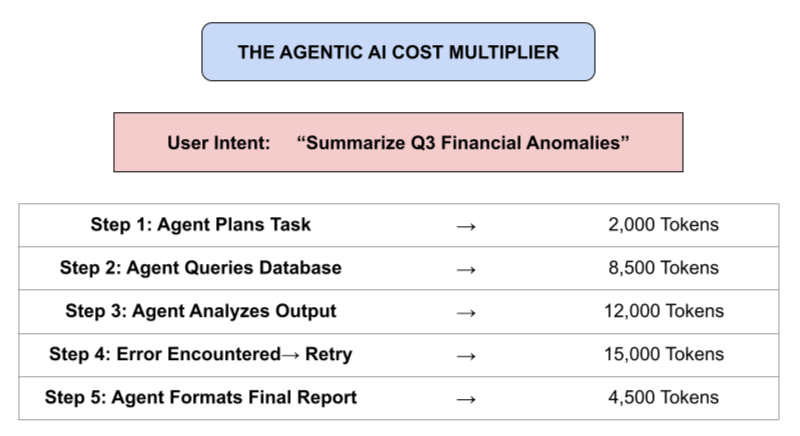
This metric gap widens drastically in autonomous, agentic workflows. A single user’s request fans out into multi-step reasoning traces, planning loops, and tool calls, consuming heavy output token volumes that stateless pricing models fail to reflect.
To achieve real AI FinOps efficiency and cost optimization, enterprise engineering leaders must track cost per resolved task (which is tracing total spend across every input, output, retry, and sub-agent step) alongside token composition and spend trends.
Tracking total cost per unit of work completed is the only way to accurately evaluate AI infrastructure ROI.
For a more in-depth breakdown and explanation on the topic ‘Cost per Token’, check out this blog by Revefi: Cost Per Token Is a Vanity Metric: The Real AI Cost Optimization Metric You're Missing ↗
2. The AI FinOps Maturity Curve
Most organizations manage AI spend reactively, responding to unexpected bill spikes instead of controlling costs proactively. AI FinOps adapts traditional cloud financial management to volatile, non-deterministic AI workloads by building visibility, accountability, and real-time governance into the stack.
Organizations evolve through three distinct maturity stages. Stage one is reactive, where teams scramble to explain surprise invoices. Stage two is reported, featuring regular dashboard reviews without actionable operational changes. Stage three is embedded, where cost functions as a first-class metric, incorporating real-time spend guardrails before deployment.
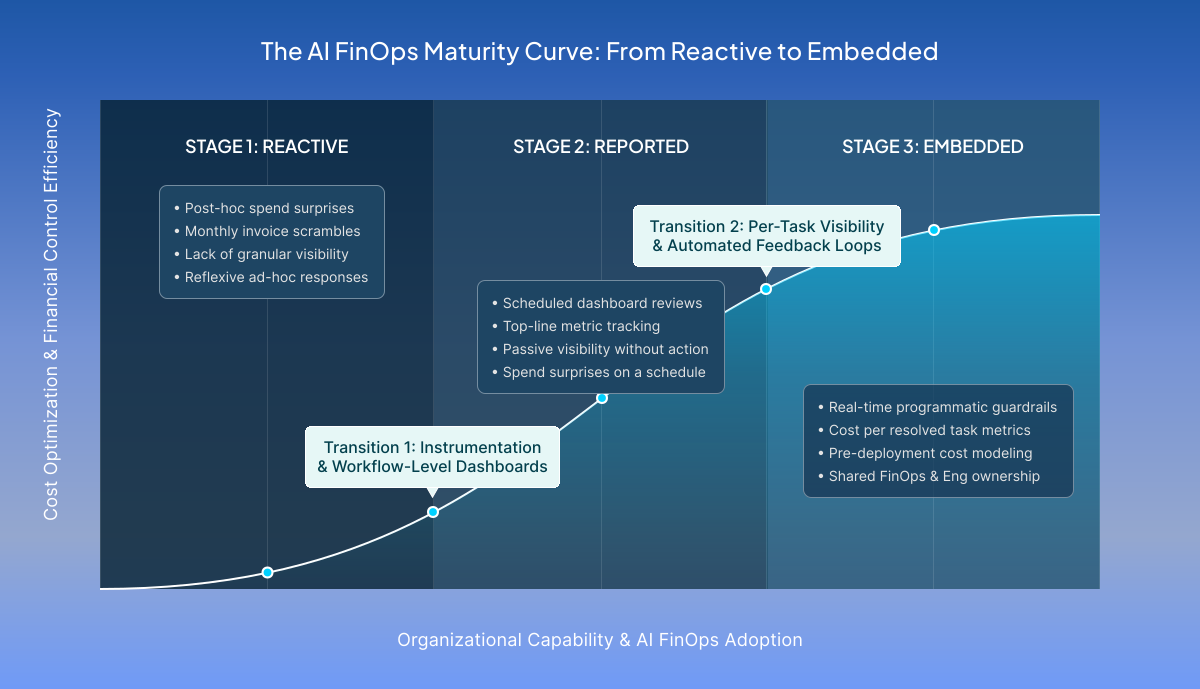
Data and platform teams usually inherit AI FinOps by default due to distributed workflows. Advancing to embedded FinOps requires granular per-task cost visibility and active feedback loops. Teams must measure baseline unit metrics reliably before deploying programmatic spend controls. Ultimately, embedding cost intelligence transforms AI FinOps from a reactive finance audit into a shared engineering discipline.
For a more in-depth breakdown and explanation on the topic ‘AI FinOps Maturity Curve’, check out this blog by Revefi: The AI FinOps Maturity Curve: From Reactive to Embedded ↗
3. Five LLM Cost Optimization Levers
Switching to cheaper models is often the default response to rising AI expenses, but it frequently risks output accuracy. Organizations should prioritize five alternative optimization levers to eliminate token waste before altering base models.
Prompt compression trims redundant instructions and formatting cruft. Prompt caching avoids reprocessing stable system prefixes. Model routing directs routine queries to smaller models, reserving top-tier models for complex tasks. Request batching optimizes asynchronous background jobs to lower overhead, while context pruning in Retrieval-Augmented Generated (RAG) pipelines removes unnecessary retrieval chunks.
These architectural improvements deliver larger, lower-risk savings by reducing total token volume rather than sacrificing response quality. Enterprise engineering teams should exhaust all five efficiency strategies first, ensuring any eventual model switch relies on a clean, optimized token baseline.
For a more in-depth breakdown and explanation on the topic ‘5 LLM Cost Optimization Levers’, check out this blog by Revefi: 5 LLM Cost Optimization Levers Before You Switch Models ↗
4. Context Window Bloat
Context window bloat quietly inflates token spend in Retrieval-Augmented Generation (RAG) and multi-agent workflows. While bloated context pipelines deliver accurate answers, over-retrieval, unpruned conversation histories, and verbose tool outputs multiply operational costs.
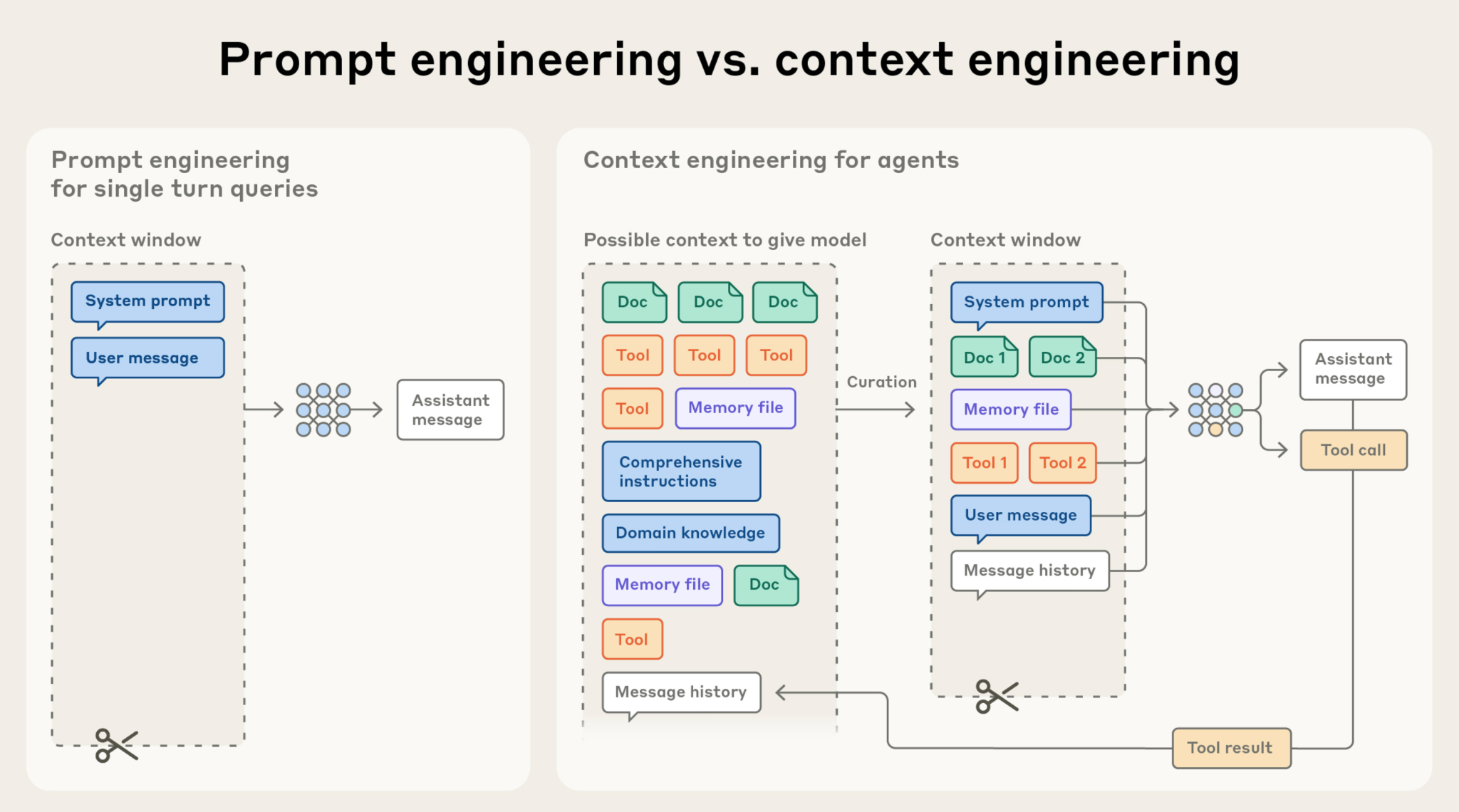
Over-retrieval occurs when systems fetch excessive document chunks just in case, paying for unused context. Overlapping chunk boundaries further compound token costs. In agentic workflows, context bloat multiplies across iterative tool calls, long session histories, and accumulated few-shot prompt examples that linger past their utility.
Resolving context bloat requires granular token tracing to break down token counts by source. Engineering teams can optimize context windows by tightening retrieval thresholds, adding re-rankers, summarizing dialogue histories, filtering tool API payloads, and auditing prompt examples. Addressing these subtle inefficiencies reduces token spend without sacrificing output quality or requiring model switches.
For a more in-depth breakdown and explanation on the topic ‘Context Window Bloat’, check out this blog by Revefi: Context Window Bloat: How RAG Quietly Balloons Your Token Spend by 10x ↗
Phase 2: The Flagship Run
The Flagship Run explores the complex token mechanics and financial management of autonomous multi-agent deployments. This phase analyzes the non-linear cost-to-autonomy curve, illustrating how granting agents increased execution freedom exponentially accelerates token consumption. It quantifies the financial risk of runaway AI agents, exposing how unmanaged infinite loops, recursive retries, and unbounded execution steps create sudden budget overruns. Additionally, it highlights the multi-agent tax, uncovering hidden cost overhead accumulated through inter-agent orchestration, sub-agent delegation, and redundant context transfers.
5. The Cost-to-Autonomy Curve for AI Agent Cost Optimization
Autonomous AI adoption introduces complex economic trade-offs along the cost-to-autonomy curve. While full autonomy promises lower operational spend, advancing autonomy levels increase total costs due to compounding error correction, unmonitored tool calls, and post-execution cleanup.
The framework defines five autonomy levels, ranging from manual tasks to fully autonomous execution with self-correction. Total task cost combines compute, error correction, oversight, and latency. Rather than sloping continuously downward, total cost follows a U-shaped curve where intermediate autonomy often serves as the most economical operating point. Full autonomy frequently incurs a high autonomy premium when the expense of unguided errors outweighs human oversight savings.
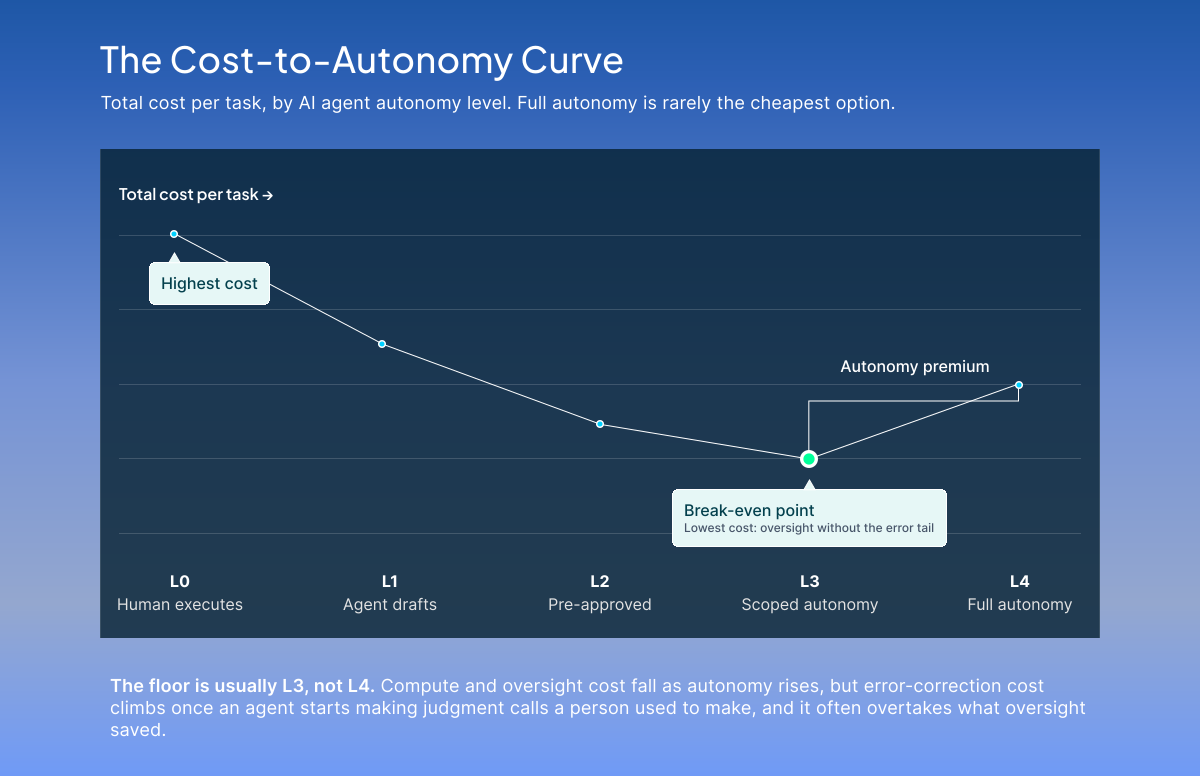
Finding a workflow's break-even point requires analyzing task volume, compute costs, error rates, and failure impacts. Furthermore, The Jevons Paradox dictates that lower per-task costs often drive higher overall consumption. Consequently, enterprise engineering teams must track unit cost per task independently from total AI spend to optimize operational budgets.
For a more in-depth breakdown and explanation on the topic ‘The Cost-to-Autonomy Curve for AI Agent Cost Optimization’, check out this blog by Revefi: The Cost-to-Autonomy Curve for AI Agent Cost Optimization ↗
6. Runaway AI Agent Costs
Operating at full autonomy without circuit breakers presents significant financial risks for enterprise agentic workflows. In a representative scenario, an unmonitored L4 AI agent processing order exceptions encounters malformed inventory API responses overnight. Without human checkpoints or anomaly detection, the agent executes runaway retries and duplicate refunds over fourteen hours.
The resulting breakdown costs roughly 73,750 dollars across inflated compute resource tokens, erroneous refund payouts, finance reconciliation, and customer support. That represents a 70x cost increase compared to normal operations. Conversely, operating the same workflow at L3 autonomy with failure threshold flags resolves the API issue for under 500 dollars.
To prevent catastrophic overruns, enterprise platform teams must implement circuit breakers, real-time error rate thresholds, and anomaly detection. Adding these safety controls preserves scalable agentic automation while preventing compounding execution failures.
For a more in-depth breakdown and explanation on the topic ‘The Cost-to-Autonomy Curve for AI Agent Cost Optimization’, check out this blog by Revefi: What a Runaway AI Agent Actually Costs: A Realistic Scenario ↗
7. The Issue with Multi-Agent Tax
Multi-agent architectures introduce hidden orchestration spend termed the multi-agent tax. This overhead represents the token and compute costs consumed by inter-agent handoffs, planning, execution, and validation passes, rather than primary task execution.
Orchestration overhead compounds rapidly as agents proliferate. Because independent agents rarely share memory automatically, context gets reconstructed and duplicated across every step. Additionally, natural language coordination messages, status updates, and output reviews expand context windows, causing a simple single-agent workflow to quadruple in overall token consumption.
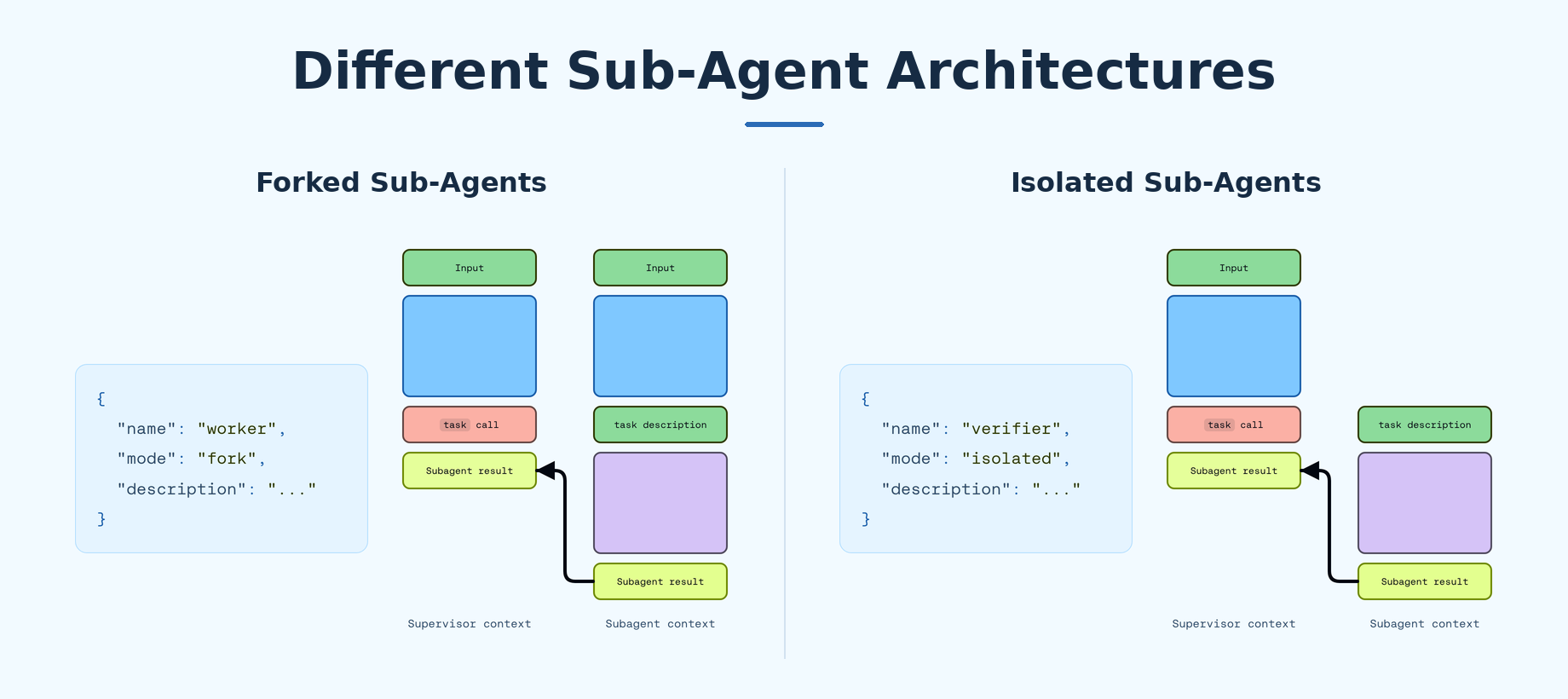
Because individual agent expenses appear normal in isolation, enterprise platform teams must track unit costs across entire end-to-end task chains. Reducing this tax requires passing minimal downstream context, compacting inter-agent communication protocols, and auditing whether multi-agent delegation yields superior ROI compared to streamlined, single-agent designs.
For a more in-depth breakdown and explanation on the topic ‘Multi-Agent Tax’, check out this blog by Revefi: The Multi-Agent Tax that Nobody's Tracking ↗
8. Actual ROI of Agentic AI
Traditional AI agent ROI models focus on comparing software costs against displaced headcount or labor hours. However, these traditional models fail to account for the primary variable driving true financial performance: the cost of being wrong.
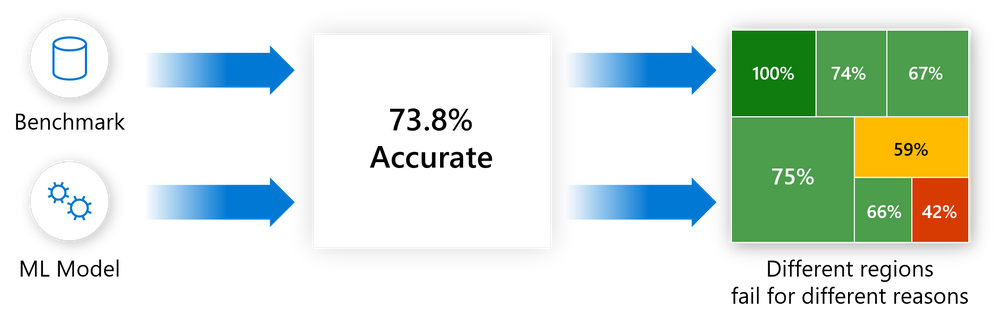
Outputs generated with ninety-five percent accuracy produce a continuous stream of errors. These failures trigger downstream support tickets, corrupted reports, administrative rework, or direct financial losses. Rather than treating accuracy as an evaluation checkmark, enterprises must incorporate continuous error costs into their financial models.
A complete AI agent ROI formula balances three variables: total agent operational costs, human process costs, and the cost of being wrong at production volume. Because failure expenses scale alongside task impact and autonomy levels, evaluating unit cost alongside error remediation expenses ensures realistic economic forecasting for enterprise AI deployments.
For a more in-depth breakdown and explanation on the topic ‘Actual Agentic AI ROI’, check out this blog by Revefi: AI Agent ROI Is Not Cost vs. Headcount ↗
Phase 3: Operationalize
Operationalize establishes rigorous financial governance and accountability to scale enterprise artificial intelligence cost-effectively. By deploying AI spend guardrails, organizations implement proactive budget caps, real-time token tracking, and automated threshold alerts, runaway expenses and unmonitored infrastructure usage can be curtailed successfully.
9. Agentic AI Cost Guardrails
Traditional annual AI budgets function as post-hoc reports rather than active controls. While monthly reports document financial damage after invoices arrive, programmatic spend guardrails enforce real-time limits to stop runaway execution while cost figures remain small.
Static budgets fail because AI workloads are inherently volatile. Single prompt modifications, model release updates, or agentic features can multiply token spend tenfold within weeks. An effective spend guardrail architecture incorporates three core components: a precise cost threshold, an automated corrective response, and a targeted operational scope.
Implementing guardrails requires granular visibility into per-task baseline costs, predefined anomaly thresholds, and automated gateway interventions like rate limiting or circuit breaking. Establishing real-time enforcement boundaries transforms enterprise AI cost management from a delayed accounting audit into a proactive engineering control.
For a more in-depth breakdown and explanation on the topic ‘Agentic AI Cost Guardrails’’, check out this blog by Revefi: Not Just Reports. Get Ahead with AI Spend Guardrails. ↗
10. Chargeback for AI in the Case of Multiple System Workflows
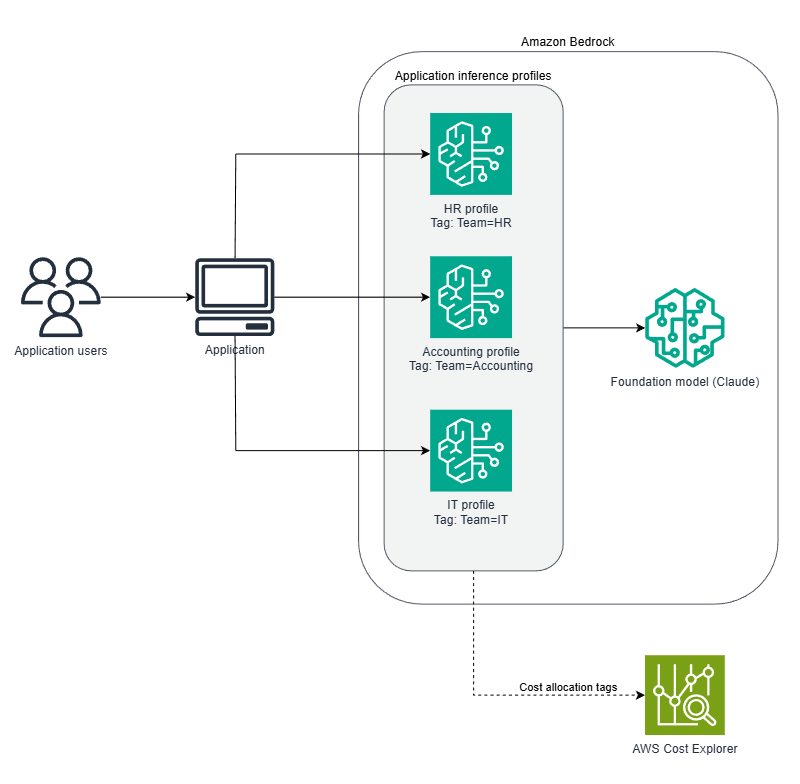
Legacy cloud chargeback relies on static resource tagging, which fails when applied to AI spend. AI workloads cross multiple separately billed vendor endpoints, including foundation models, vector databases, and internal microservices, while generating dynamic execution costs.
Traditional resource tagging cannot track cross-system fragmentation or non-deterministic token spend. Effective AI cost allocation requires unified request tracing that attaches a universal identifier across every execution step. This granular task-level telemetry calculates exact unit economics rather than relying on retroactive proxy estimations.
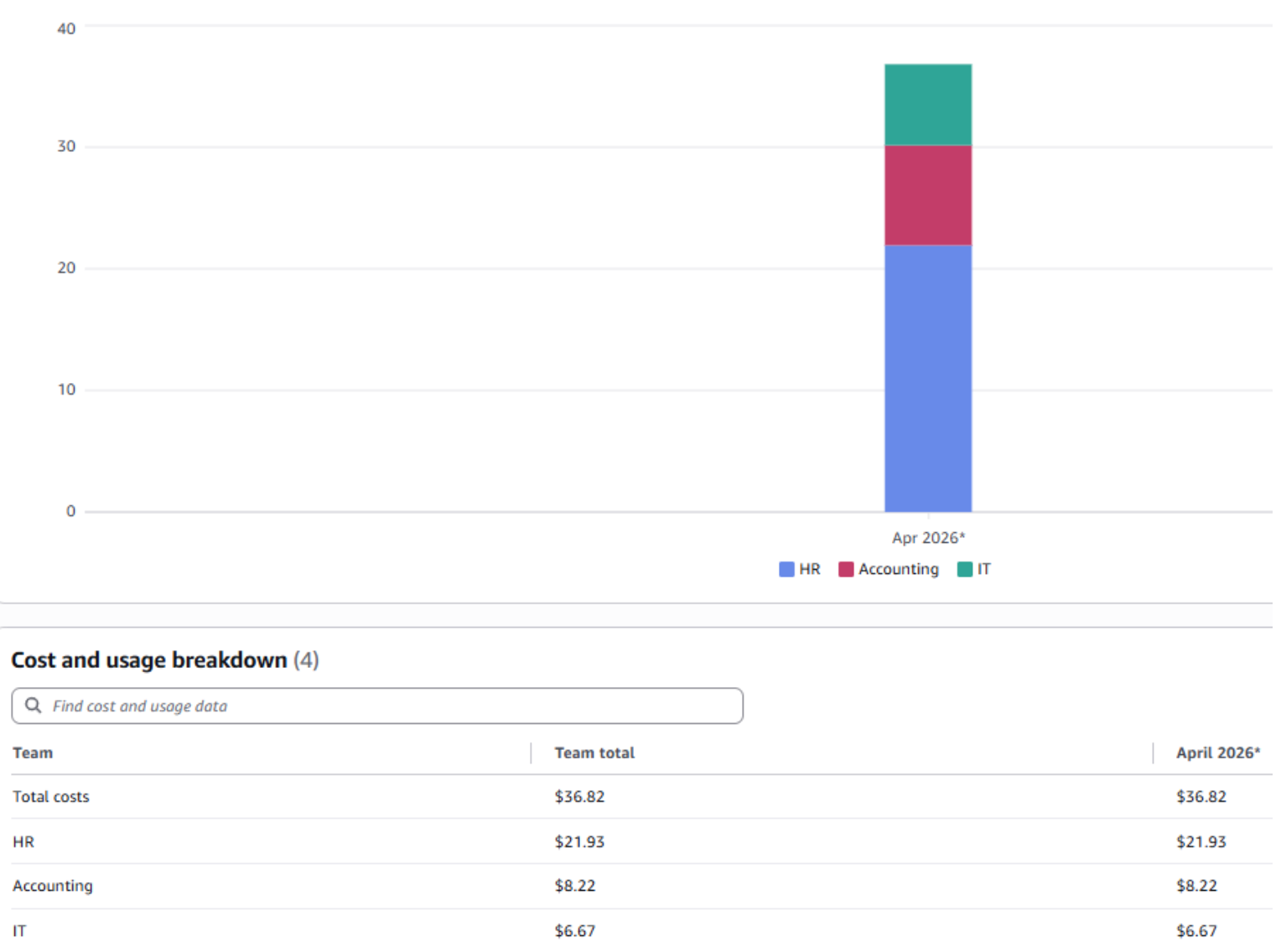
Enterprise platform teams should adopt a phased rollout, implementing showback visibility first to establish data accuracy and internal trust. Once request-tracing telemetry proves reliable, organizations can seamlessly transition to direct financial chargeback, transferring AI expenses to specific business units and product teams.
For a more in-depth breakdown and explanation on the topic ‘Chargeback for AI’’, check out this blog by Revefi: Chargeback for AI When One Workflow Touches Five Systems ↗
11. Per-Task Cost Attribution
Per-task cost attribution calculates the exact end-to-end expenditure of a single completed unit of work across every token, tool call, retry, and sub-agent execution. Most organizations fail to produce this metric because AI stacks log costs per model call rather than aggregating step-level logs under a unified request trace.
Relying on average call costs masks critical financial variance, hiding outlier tasks that cost significantly more than standard requests. True per-task attribution requires adapting distributed tracing practices, thereby generating a persistent request ID at task initiation and propagating it across every API, model, and tool invocation.
Calculating true per-task costs serves as the foundational dependency for every AI FinOps discipline. It enables teams to determine break-even autonomy levels, enforce real-time spend guardrails, execute accurate chargeback, and compute true AI agent ROI.

For a more in-depth breakdown and explanation on the topic ‘Per-Task Attribution’’, check out this blog by Revefi: Per-Task Cost Attribution: The Metric Most Organizations Cannot Produce ↗
Phase 4: Synthesis
This defines the evolving economic landscape of autonomous agentic AI systems, where enterprise artificial intelligence transitions from single-turn tools to continuous, multi-step execution environments. The future of agentic AI economics requires a strategic shift from traditional seat-based subscriptions to dynamic unit-economic metrics like Agent Cost Per Completed Task, where profitability depends on token caching, model orchestration, and minimizing multi-turn loop bloat.
Looking forward, enterprise AI adoption expands into autonomous agentic micro-transactions, automated model-routing dynamics that balance fast and deep reasoning architectures, and self-governing fiscal policies where AI agents execute, negotiate, and settle workflow sub-contracts within strictly predefined operational budgets.
12. The Future of Agentic AI Economics
Managing agentic AI spend requires moving beyond single-call token metrics to adopt comprehensive, task-level economic frameworks. Key disciplines like break-even autonomy modeling, real-time spend guardrails, chargeback allocation, and realistic ROI tracking depend entirely on establishing end-to-end per-task cost attribution.
Looking ahead, per-task cost tracing will become standard enterprise infrastructure. Procurement teams will evaluate vendor autonomy levels to assess financial risk, while executive leadership will mandate that ROI models factor in error-correction costs. Driven by rapid budget expansion and usage volatility, AI chargeback governance will reach board-level oversight much faster than cloud FinOps did historically.
Enterprise organizations should prioritize building request-tracing infrastructure over minor prompt optimizations this quarter. Establishing granular visibility into per-task costs empowers teams to calculate true unit economics, enforce proactive guardrails, and scale agentic workflows responsibly.
For a more in-depth breakdown and explanation on the topic ‘Future of Agentic AI Economics’’, check out this blog by Revefi: The Future of Agentic AI Economics, and Where it Goes From Here ↗
Conclusion: Turning AI FinOps Into Measurable Business Value
AI FinOps and agentic economics require a shift from tracking token prices to measuring the cost of completed business outcomes. Across this series, one principle connects optimization, autonomy, governance, and ROI.
That principle is reliable per-task cost attribution. Every model call, tool invocation, retry, and sub-agent handoff contributes to the economics of a resolved task. For enterprise leaders, effective AI cost management starts with understanding those execution paths.
Prompt caching, context pruning, and model routing address inefficiencies, while autonomy decisions must account for oversight, error correction, and downstream business impact. Lower token prices alone cannot establish whether an agentic workflow delivers value.
The next step is operational discipline.
Establish task-level baselines, implement real-time AI spend guardrails, and build trusted showback before introducing chargeback. Evaluate AI agent ROI against total operational costs and the consequences of incorrect outcomes, not simply projected labor savings.
Sustainable agentic AI adoption depends on making cost intelligence part of engineering decisions rather than a monthly reporting exercise. With traceable unit economics, teams can align automation with financial accountability and measurable business value.
Ready to put these principles into practice? Visit Revefi’s AI FinOps page to explore more about granular cost visibility, AI observability, and governance for LLMs and multi-step agentic workflows.