Cloud chargeback functioned smoothly because the accounting unit remained clear. A specific team launched an instance, that instance had an assigned owner, and the bill mapped directly to that owner.
AI expenditure provides no such convenience.
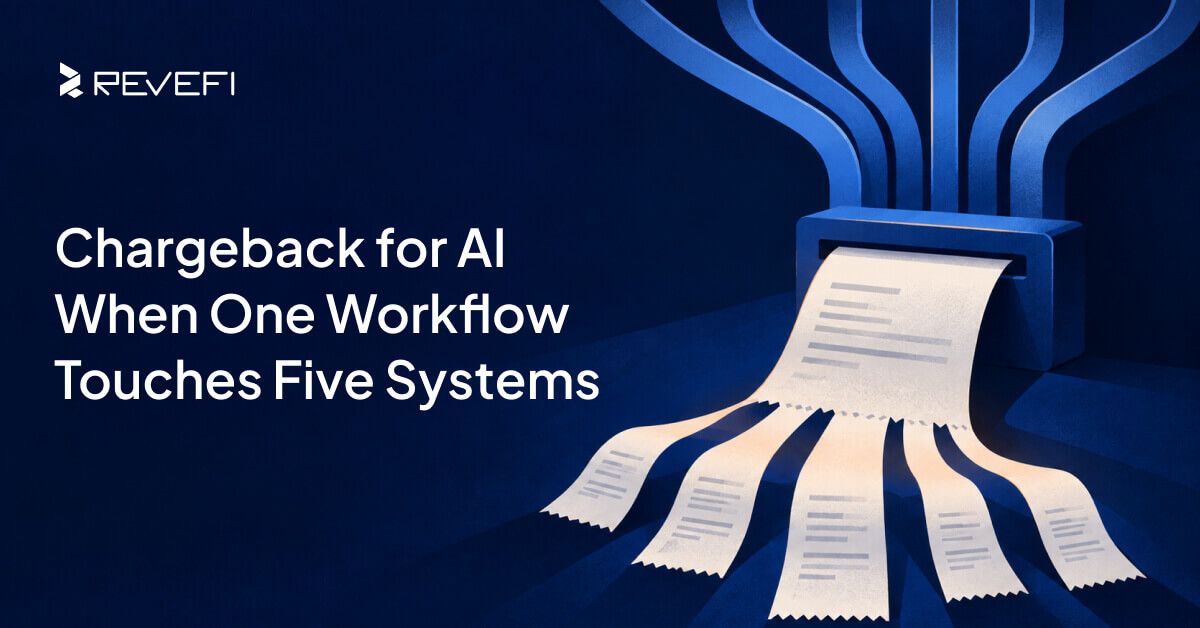
A single agentic workflow can invoke a model provider, query a data platform, access a vector database, and route through several internal APIs before generating a response. Consequently, the total expense of that single workflow ends up fragmented across multiple independent vendor invoices. Allocating those distributed costs back to the specific team or product line driving the usage presents a far greater challenge than cloud chargeback ever created, yet most organizations continue trying to solve it using legacy cloud management tools.
What Is Chargeback for AI?
AI spend chargeback is the practice of reallocating shared infrastructure expenses directly to the specific teams, products, or clients generating them. Instead of absorbing generative AI expenses into an unassigned central IT budget, chargeback makes financial impact transparent to the actual decision-makers. In an AI context, this practice answers critical business questions, such as which product feature drove this month's model costs, which client usage is unusually expensive to serve, or which department workflow caused a sudden token usage spike.
Why Does Traditional Cloud Chargeback Fail for AI Workloads?
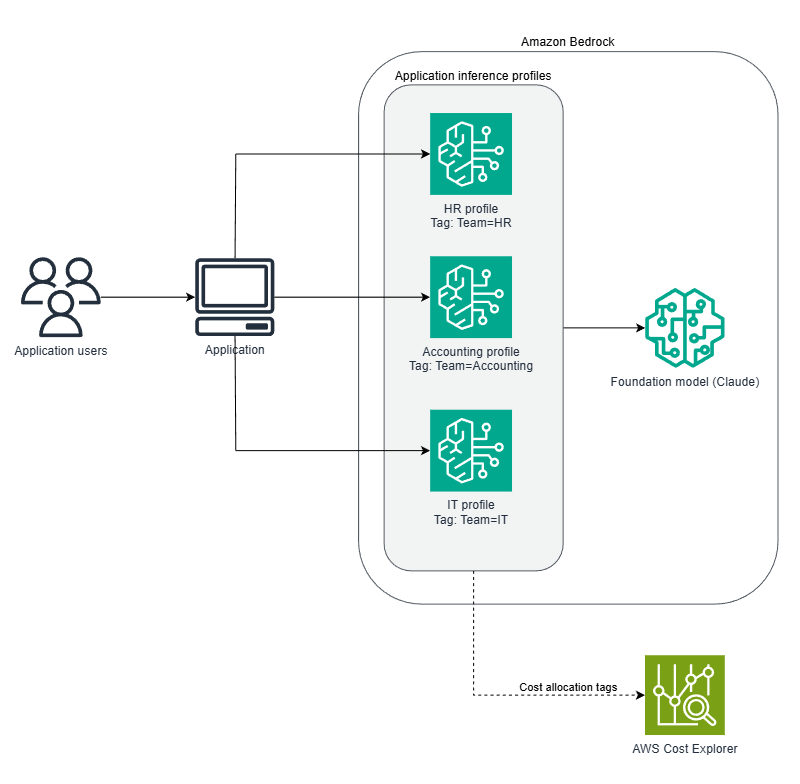
Legacy cloud cost management relies on basic resource tagging, which attaches a team or project ID to a specific server, storage bucket, or database to roll up expenses. Artificial intelligence workloads break this traditional model in two key ways.
First, cross-system fragmentation occurs when a single user prompt triggers costs across multiple separately billed platforms in milliseconds, such as a large language model API call, a vector database retrieval, and internal service calls. By default, these distinct systems rarely share unified tagging schemes or request IDs.
Second, non-deterministic cost variability affects modern agentic AI workflows. The exact same feature can incur vastly different expenses per run depending on the required retries, tool integrations, or sub-agent delegations. Because execution paths vary dynamically, static resource tags offer little insight into actual invocation costs.
How to Attribute Costs Across Complex Multi-System Workflows?
Accurate AI cost attribution requires request tracing rather than static tagging. Teams must track an individual execution path across every system it touches and aggregate expenses at each step, rather than attempting to divide static infrastructure ownership.
To implement tracing, a unique and consistent request ID must propagate through every hop, moving from the initial API call to downstream model interactions, tool calls, and database queries. Without end-to-end tracing, organizations rely on retroactive estimations, such as dividing total bills by overall request volume. This proxy approach fails completely in agentic AI systems where individual request costs vary dramatically.
AI Showback Versus Chargeback Key Differences
Understanding the distinction between showback and chargeback is essential for AI cost governance. Showback displays detailed cost visibility to a team for awareness without directly deducting expenses from their operational budget. Chargeback actively transfers aggregated AI expenses onto a specific team or product budget, creating real financial accountability.
Most enterprise organizations should begin with showback for AI operations. Because attribution errors undermine credibility, teams will naturally reject financial responsibility if reporting is inaccurate. Once distributed request tracing proves consistently accurate, transitioning from showback to financial chargeback becomes seamless.
Building an Effective AI Spend Chargeback Model
Before implementing an enterprise AI chargeback strategy, ensure three foundational elements are active:
- Unified Request Tracing: Deploy a universal identifier that accompanies every request across all software layers to collect accurate cost metrics instead of broad estimates.
- Granular Task-Level Data: Provide clear cost breakdowns itemized by execution steps and individual systems, rather than high-level aggregate departmental summaries.
- Defined Shared-Resource Allocations: Establish clear business rules for dividing central infrastructure costs, such as pooled vector databases or centrally negotiated foundation model contracts that naturally serve multiple units.
Key Takeaways
Managing chargeback for artificial intelligence is far more complex than traditional cloud infrastructure accounting. AI workloads cross system boundaries and generate dynamic, unpredictable costs that static infrastructure tagging cannot track. Implementing end-to-end request tracing is the only reliable way to achieve the granular cost data needed for financial accountability. Establish trust first with comprehensive showback reports, then transition to full chargeback once your metrics are proven and validated.