
The default response to a rising AI bill is almost always the same, which is to switch to a cheaper model.
It's the most visible lever, the easiest to explain in a budget meeting, and usually the last one you should pull. Model choice is one input into total cost. Five other levers typically get skipped entirely, and most of them deliver bigger, safer savings than a model downgrade that might quietly tank your accuracy and cost you more in rework than it saves in token price.
Here's the order most teams should actually work through, and why each lever gets ignored.
What Is Prompt Compression and Why Does It Cut LLM Costs?
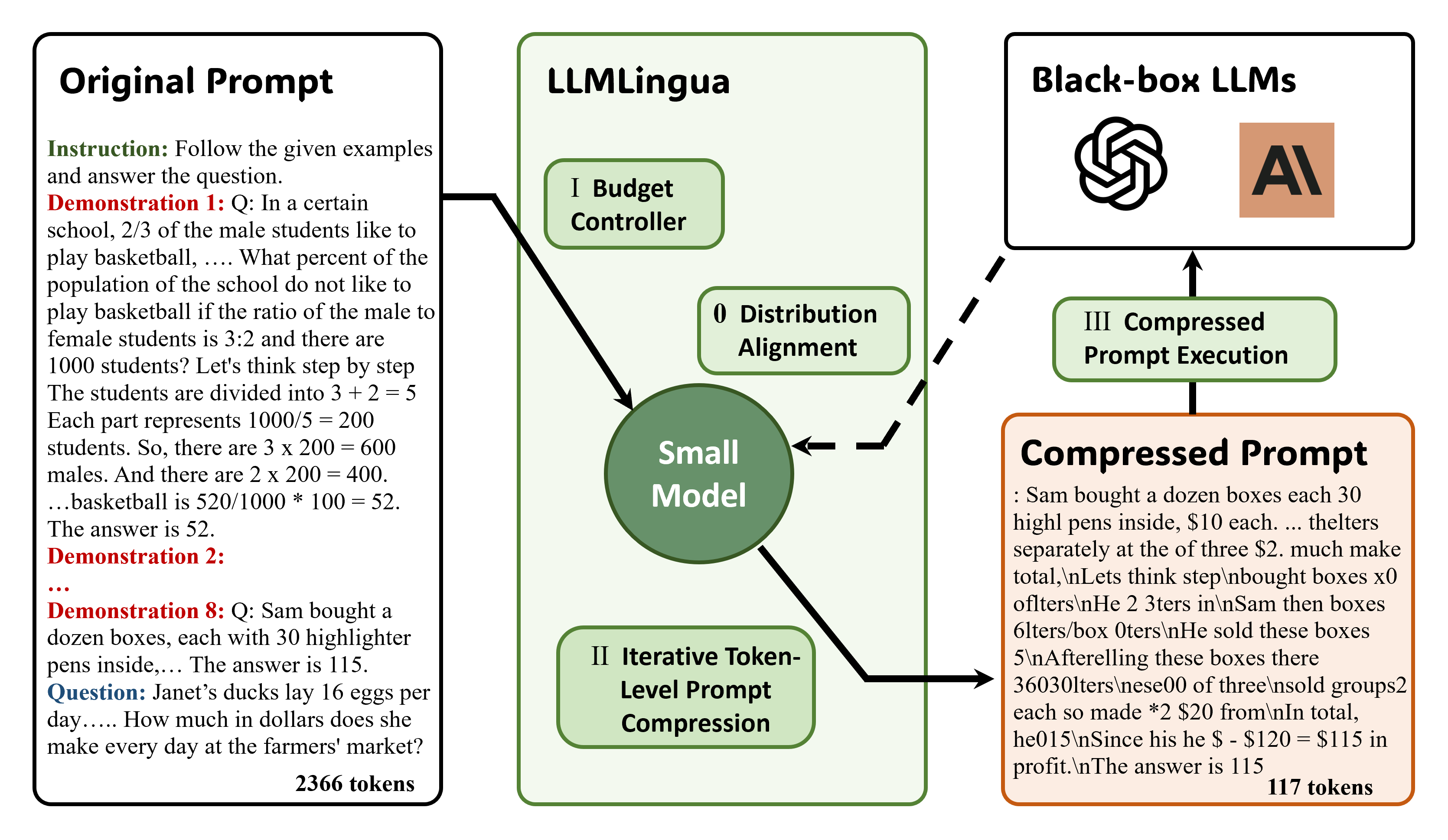
Prompt compression involves streamlining the exact information sent to an AI model by removing repetitive instructions, condensing lengthy system prompts, and stripping out unnecessary formatting that yields no improvement in results. Over months of continuous updates, production prompts inevitably gather unnecessary clutter. Teams frequently leave behind outdated examples, overly defensive rules created for rare edge cases that run during every interaction, and formatting guidelines repeated multiple times.
Every single token within a prompt carries a direct financial cost on every invocation. Delivering a bloated system prompt millions of times each day creates a far larger expense than most organizations anticipate before conducting a precise audit.
What Is Prompt Caching and How Much Can It Save?
Prompt caching saves the preprocessed state of a prompt prefix, ensuring that recurring sections of a request do not require fresh processing on every single call. This technique delivers maximum impact for workflows that feature an extensive, static system prompt or context block followed by a brief, changing user query, a structure that represents a massive portion of production AI traffic.
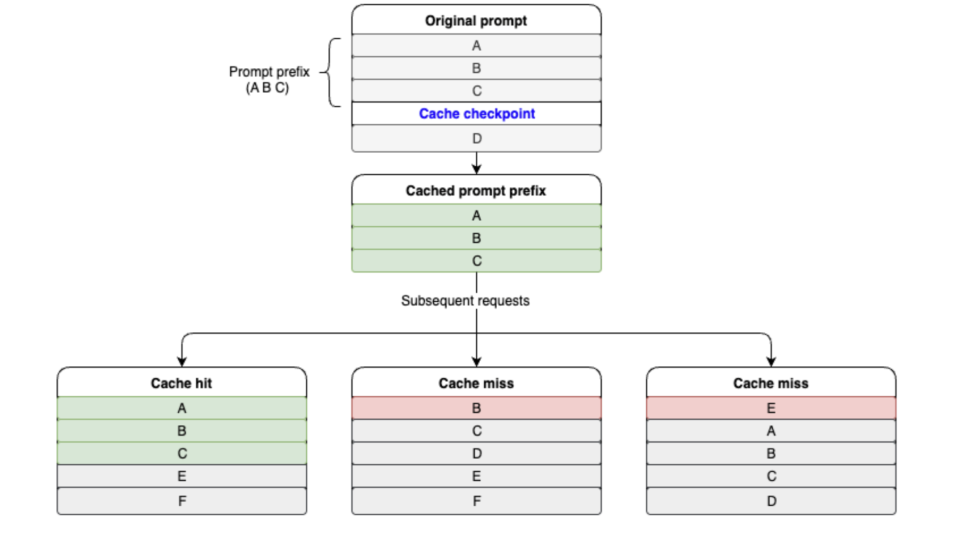
Achieving a high cache hit rate on these workloads frequently offers the single most effective, low-effort savings strategy available. Despite its value, teams regularly fail to track this optimization properly, as it demands actively monitoring the actual hit rate instead of simply assuming the feature functions as expected.
What Is Model Routing and Why Does It Matter for Cost?
Model routing involves directing every request to the most affordable model capable of executing the task accurately, rather than relying on a top-tier model for every operation by default. Simple classification tasks, quick data lookups, or standard formatting steps do not require the capabilities of an advanced multi-step reasoning model. Despite this fact, many production setups apply a single high-end model across all operations simply because building routing logic requires extra engineering effort that teams failed to prioritize.
This issue represents the modern equivalent of over-provisioning a cloud instance for maximum peak traffic and failing to scale it back down. Resolving this inefficiency does not mean replacing your single primary model with a cheaper alternative, but rather deploying multiple models and routing each specific request to the lowest-cost option that successfully completes the work.
What Is Request Batching and When Does It Help?
Batching gathers multiple requests into unified groups for more efficient processing, significantly lowering per-request costs for tasks that do not demand real-time answers. While batching does not fit every use case, particularly user-facing tasks that demand low latency, a remarkable volume of internal and asynchronous AI operations can easily support it. Examples include nightly data verification checks, large-scale classification tasks, and automated report generation.
Organizations that fail to isolate latency-sensitive workloads from batchable ones frequently process every single request at real-time pricing levels, even when a substantial portion of that work could run far more economically on a flexible schedule.
What Is Context Pruning and Why Do RAG Pipelines Waste Tokens?
Context pruning requires selectively including only the retrieved results and context directly relevant to the query at hand, rather than packing in every piece of data that might offer utility. Retrieval augmented generation pipelines frequently suffer from this inefficiency. Many systems retrieve excess data under a broad fallback approach, relying on the model to filter key details. However, every retrieved snippet consumes tokens that generate costs regardless of actual model usage. Fetching ten documents when three suffice does not increase thoroughness, it silently inflates expenses across every invocation and drives up token usage without explicit approval.
Switching Models Should Only Serve as a Final Option
Model selection plays a critical role, yet it represents an imprecise tool compared to the previous five strategies. Moving to a lower-cost model uniformly reduces per-token pricing without resolving core inefficiencies such as transmitting excess tokens, re-evaluating static prefixes, deploying premium models for basic tasks, executing batch jobs in real time, or pulling excessive context. Executing the five primary optimizations first establishes the baseline expenditure a workload truly demands. That refined figure represents the ideal baseline for model adjustments, rather than the artificially high starting point.
The Takeaway
A rising AI bill usually gets answered with a model downgrade, and that's often the least effective lever available. Prompt compression, prompt caching, model routing, request batching, and context pruning typically deliver larger and lower-risk savings, because they cut waste rather than trading accuracy for a lower sticker price. Work through those five before touching the model, and the model decision that's left is a much smaller, much safer one to make.