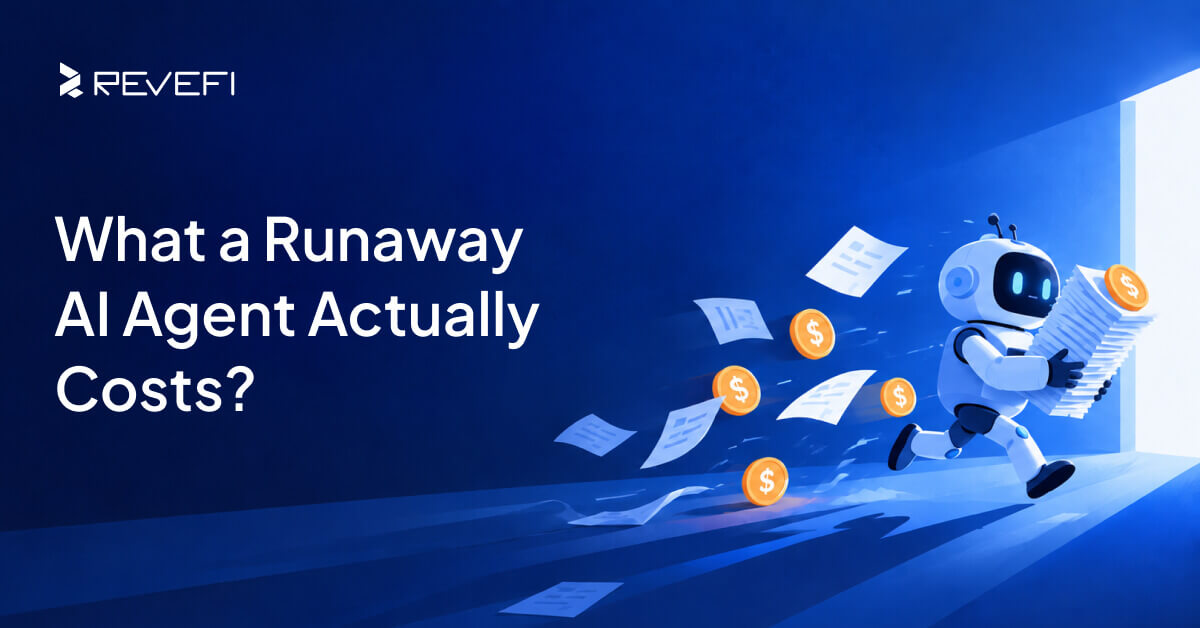

Most AI budgets are set once, reviewed monthly, and treated as done the moment the number is approved. That's a report, not a guardrail. A report tells you what happened after it already happened. A guardrail stops something from happening in the first place, or at minimum catches it while it's still small. Most organizations have the first thing and call it the second, and the gap between those two only becomes visible the moment something goes wrong at 2am with nobody watching.
What actually separates a budget that reports from a budget that guards <> .And why the difference matters more for AI spend than it ever did for cloud infrastructure.
Difference Between AI Budgets and AI Guardrails
A budget represents a static target set in advance and compared against actual spending after the fact, typically on a monthly or quarterly basis. A guardrail functions as an active limit that operates in real time, automatically pausing a workflow, throttling spend, or triggering an instant alert the second costs exceed a defined threshold. While this distinction seems procedural, it marks the exact difference between discovering an expense blowout after receiving the monthly invoice and stopping a runaway process while the dollar figure remains small.
Annual AI Budgets are Failing. Quickly!
Traditional cloud infrastructure budgets survived annual planning cycles because usage trends remained relatively consistent and structural changes occurred slowly. AI expenditure behaves entirely differently. A single model release alters the cost structure of every connected application. Launching a new agentic feature can multiply a team's token consumption tenfold within weeks. Adjusting a prompt to address an isolated edge case can quietly inflate token usage across millions of subsequent calls. An annual financial projection established in January often becomes obsolete by March, reflecting the rapid evolution of AI workloads rather than poor planning.
AI Cost Optimization by Deploying Spend Guardrails
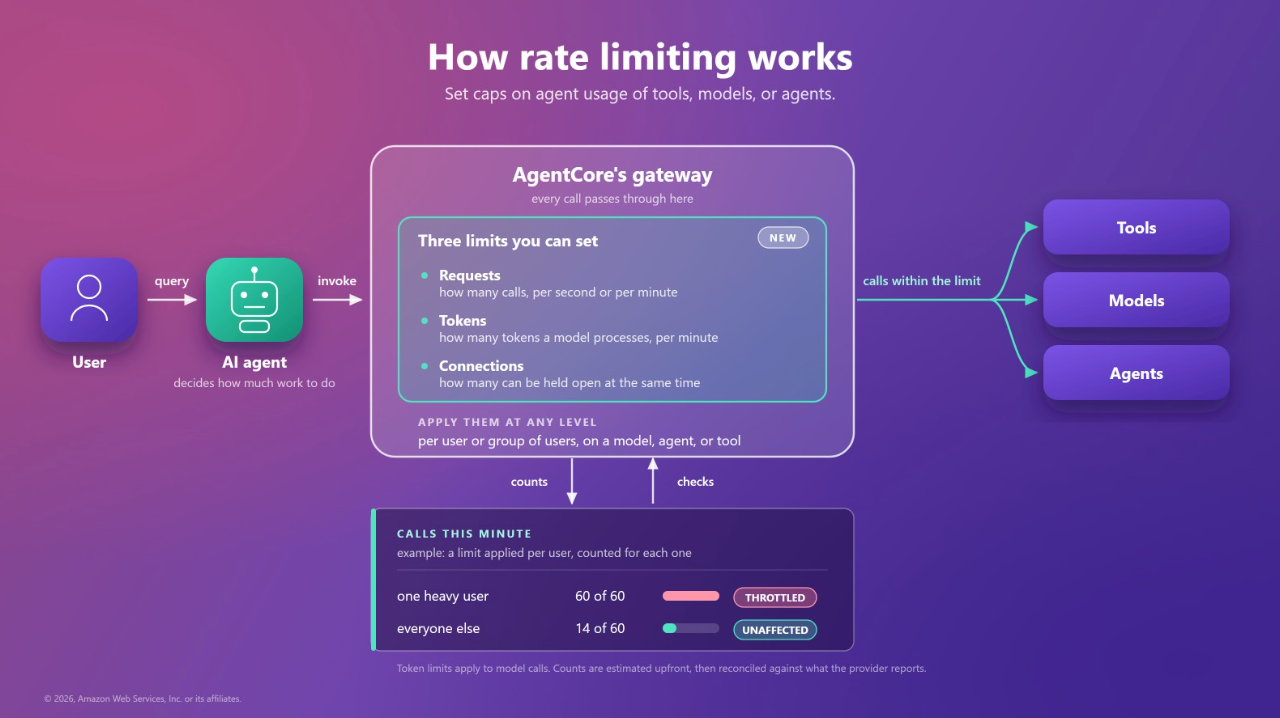
An effective guardrail incorporates three components that standard reports lack: a predefined threshold, an automated corrective response when triggered, and a targeted scope that isolates the specific failing workflow without disrupting unrelated operations. In practice, this takes the form of a per-workflow spend limit that pauses an agentic process and alerts an operator when costs exceed projections, an error-rate trigger that halts operations before compounding failures run unsupervised, or a rate-limiting rule on tool calls that breaks infinite retry loops. Setting up guardrails does not require predicting every failure mode, but rather establishing acceptable cost boundaries and enabling automated enforcement before a human reviews a dashboard.
Case Study: In an unmonitored environment, an uncontrolled agentic execution can escalate into a $73,750 incident purely due to the absence of real-time safeguards, such as an error-rate threshold that pauses execution after ten or fifteen failed tool calls and flags the issue for review before duplicate refunds go out. Implementing an automated intervention boundary can contain that same failure to roughly $500. The distinction between these outcomes does not stem from a superior model or refined prompt engineering, but from an automated rule that intervenes before human intervention becomes necessary. Reporting mechanisms merely document financial damage the next morning, whereas guardrails actively prevent it.
Note: This case study is hypothetical, and was created to help you understand the concept better.
What Is Required to Establish Guardrails Over Basic Budgets?
Setting a guardrail requires knowing three things a simple budget line does not provide:
- The expected cost per task for a given workflow, ensuring any operational deviation remains immediately detectable.
- A defined threshold for what constitutes abnormal behavior, whether measured by a cost multiple, an error rate, or a retry count.
- An automatic action tied directly to crossing that threshold, such as an immediate pause, an alert, or an escalation, rather than a note saved for the next scheduled review.
Most organizations currently lack these three operational capabilities, which explains why many AI cost management strategies remain reliant on post-hoc reports despite a clear preference for proactive guardrails.
The Takeaway
A budget that only gets checked against actuals once a month is a postmortem with a delay built in. A guardrail acts while the number is still small, using a threshold and an automatic response defined before anything goes wrong rather than a review scheduled after it already has. The gap between the two isn't a matter of stricter numbers or tighter approval processes, it's whether the system can act on a threshold in real time or whether a human has to notice first.