The pitch for almost every AI agent deployment follows the same shape:
The agent costs some amount per month -> It replaces work requiring human effort -> Therefore, ROI is positive.
With these sequence of events, the business case writes itself.
This is the calculation that gets budgetary approvals, and it's missing the variable that actually determines whether the deployment was a good idea. That variable is the cost of being wrong. Most agent ROI models treat accuracy as a given, a checkbox cleared during evaluation, rather than an ongoing cost that scales with volume for as long as the agent runs in production.
An agent that's 95% accurate isn't 95% as good as a human doing the same job. It's producing a steady stream of errors that someone, somewhere, eventually has to catch and fix, and that correction cost belongs in the ROI calculation, not outside it.
What Does the Traditional AI Agent ROI Calculation Get Wrong?
The standard formula subtracts the agent cost from the human labor cost it replaces to calculate savings. This approach assumes the agent matches the human output in quality, an assumption that rarely holds true in either direction. While agents sometimes deliver greater consistency than manual operations, they frequently struggle with edge cases and ambiguous inputs that human judgment easily resolves. The traditional model ignores this variance entirely because it evaluates cost substitution rather than output quality.
Why Is the Cost of Being Wrong the Missing Variable?
An agent error creates downstream expenses that shift onto other teams rather than appearing on the agent bill itself. An inaccurate customer response harms user trust and triggers follow-up support requests. A flawed data classification corrupts downstream reporting before detection. An incorrect financial transaction sends money out the door before a person intervenes. Traditional calculations comparing agent operating fees to displaced headcount miss these secondary impacts. The financial toll surfaces later, distributed across manual cleanup efforts and operational recovery across different departments.
How Do You Calculate the True Cost of an AI Agent Error?
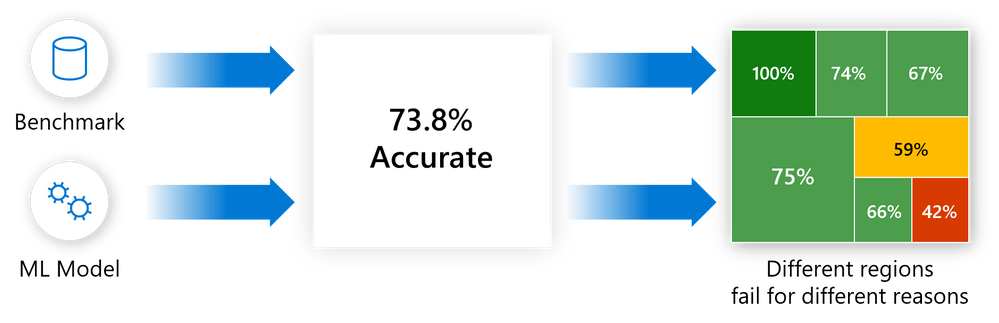
Calculating the cost of being wrong for a workflow requires multiplying the production error rate by the cost of an individual error across total task volume. Organizations must measure error rates using live production data rather than relying on idealized evaluation sets. The cost per error should account for rework time, customer impact, data corruption, and direct financial loss. A process with low per-task compute costs and high error expenses can yield a far worse economic return than a higher-cost process with minimal error impact, a distinction the traditional ROI formula cannot identify.
What Does a Complete Agent ROI Formula Look Like?
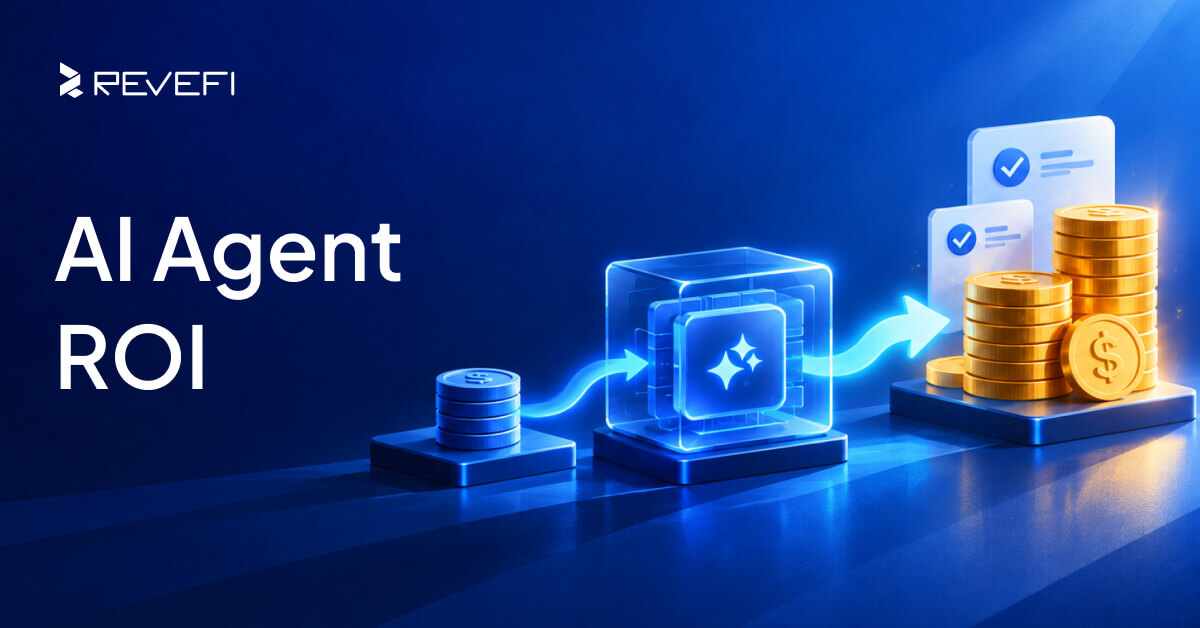
A comprehensive ROI framework compares three variables instead of two: agent operating costs, the cost of the human process being augmented or replaced, and the total expense of errors based on real-world failure rates and volume. When an agent's combined operating and error expenses remain lower than the human process baseline, the deployment delivers true value. If error expenses eliminate the operational savings, the initial business case reflected incomplete modeling rather than genuine economic return.
Why Does Error Cost Vary by Task Type and Autonomy Level?
Error cost represents a variable determined by the specific task and the agent's assigned level of autonomy, rather than a fixed model property. High-volume, low-stakes operations easily absorb higher error rates because individual mistakes carry low recovery costs. Conversely, high-stakes, low-volume workflows cannot tolerate frequent errors, as a single failure can wipe out the savings generated from dozens of successful executions. Furthermore, lower autonomy levels introduce human checkpoints that catch errors before they scale, directly influencing the net cost of failure.
The Takeaway
An ROI calculation that only compares agent cost to displaced headcount is missing half the equation, and it's usually the half that determines whether the deployment was actually a good decision. The cost of being wrong needs a real number attached to it: error rate times cost per error, measured honestly against production data, not an evaluation set built to make the agent look good. Deployments that skip this step aren't wrong every time, but they're making a bet on accuracy without ever writing down what happens if that bet doesn't pay off.