Two weeks ago I attended my first FinOps X Summit, and I came home with a clear sense of where this discipline is headed. FinOps X was (!) the FinOps Foundation’s flagship event, and 2026 was the largest one yet over 3 days (June 8–10) with more than 2,500 practitioners, and 260+ speakers across keynotes, breakouts, chalk talks, and lightning talks.
The theme on the marquee said it all: AI Value, the era of FinOps for AI, token economics, and agentic FinOps. AI spend has officially crossed over from an engineering line item into a boardroom conversation, and the community is racing to build the language, standards, and tooling to keep up. Data FinOps, governing the cost of cloud data platforms like Snowflake, Databricks, and BigQuery, was a close and very loud second.
Here are my takeaways, both on what was announced and on what it felt like to be there as a first-time attendee and sponsor.
1. Key announcements at FinOps X 2026
The headline message was consistent across the keynotes: the cost of tokens is now one of the fastest-growing lines in enterprise tech budgets, and traditional FinOps tooling was never designed to track it. Nearly every major announcement was in service of that reality.
a) The Tokenomics Foundation
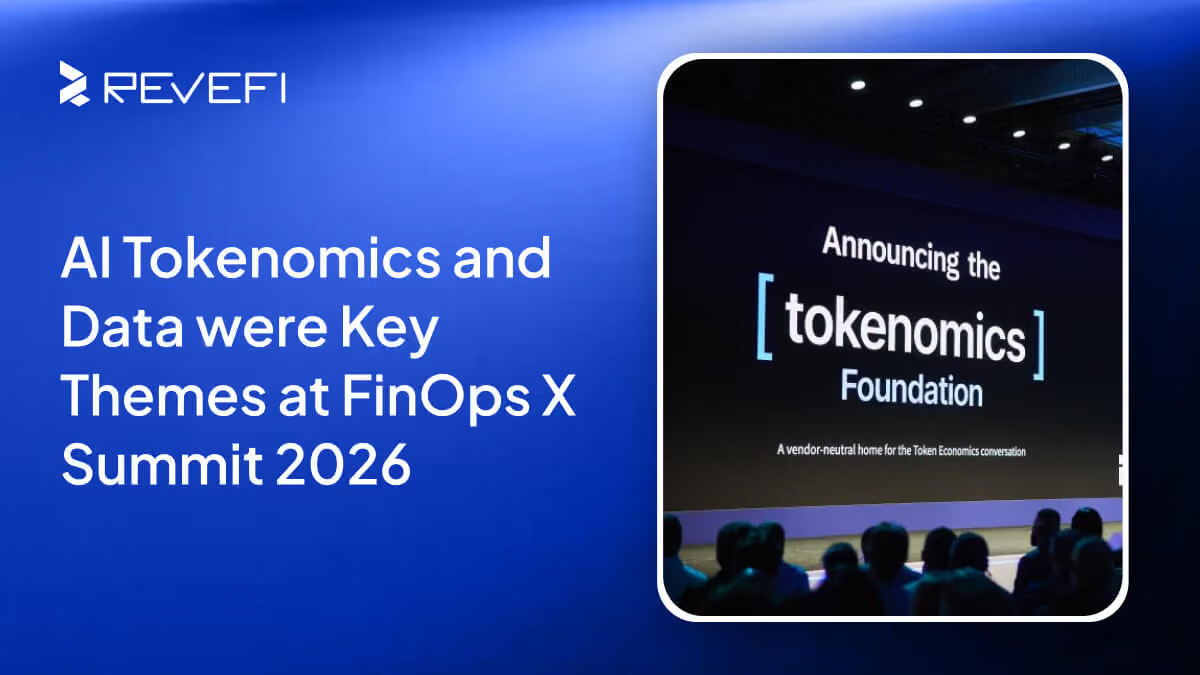
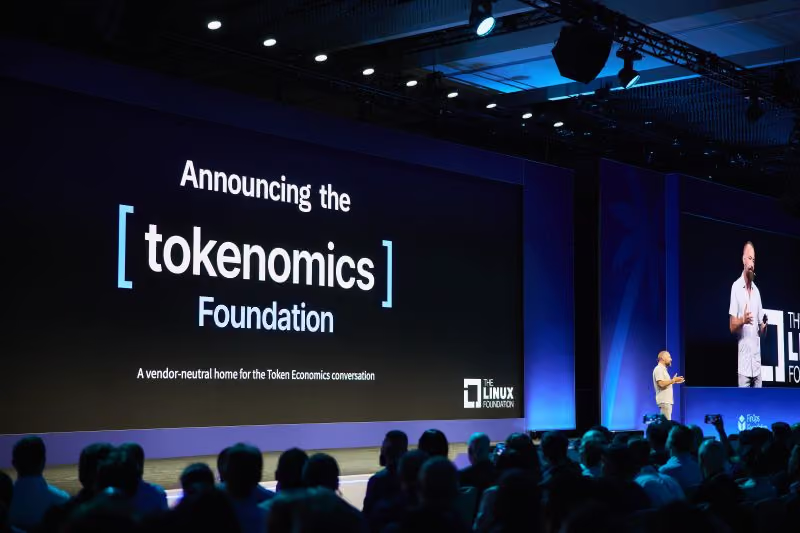
The biggest structural news was the launch of the Tokenomics Foundation, a new Linux Foundation program focused specifically on open standards for AI cost management. Early supporters read like a who’s-who of enterprise tech, including Accenture, Booking.com, Google Cloud, IBM, JPMorganChase, KPMG, Microsoft, Nebius, Oracle, Salesforce, SAP, and ServiceNow. The signal is clear: the industry has decided that token economics deserves its own shared vocabulary and standards rather than being bolted onto cloud cost management.
b) Tokenomicon, the successor event
In a candid closing, the Foundation announced that FinOps X is evolving into Tokenomicon, a new event built around the economics of AI, with its flagship debut planned for 2027. The FinOps Foundation was honest that it’s still an open question whether FinOps and tokenomics merge into one discipline or stay related-but-separate, which felt like the right kind of intellectual honesty for an inaugural moment.
c) FOCUS and the FOCUS MCP Server
The FOCUS specification, the open standard for normalized cost and usage data, got a roadmap update. FOCUS 1.5 is confirmed for December 2026 and will add native AI token tracking and a Price Sheet dataset. The FOCUS MCP Server also went live, an endpoint that lets AI assistants pull the current spec on demand instead of leaning on documentation that goes stale. For anyone building agents on top of billing data, that is a quietly important piece of plumbing.
d) Cloud and vendor AI announcements
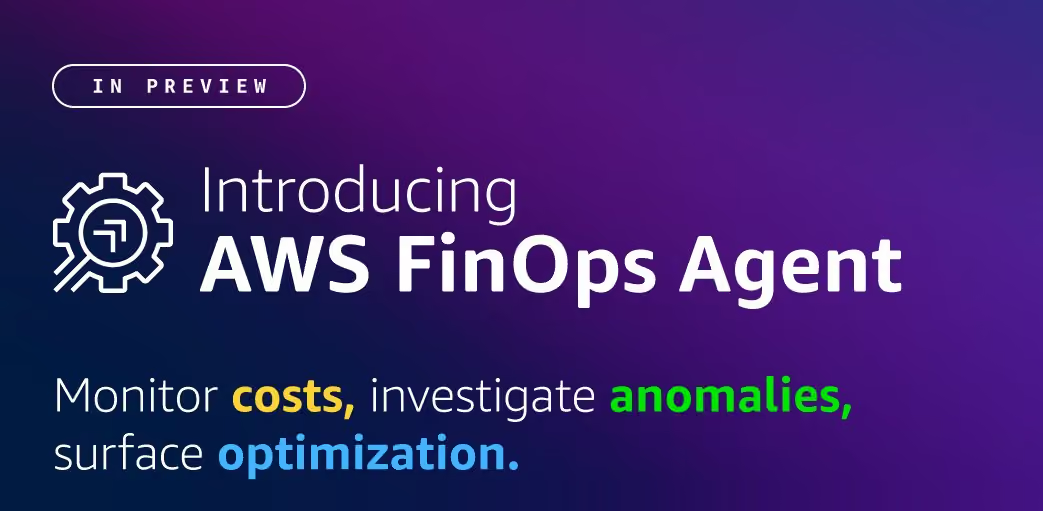
Almost every vendor on the floor arrived with an AI story. A few that stood out: AWS introduced the AWS FinOps Agent in public preview, with natural-language cost Q&A, anomaly investigation, and Jira/Slack integration. Google Cloud announced Spend Caps and an AI Explainability Agent to embed cost governance into the platform. The recurring question underneath all of it was the same one we ask ourselves: is the AI layer reasoning from a governed, allocation-aware data model, or is it a natural-language wrapper sitting on top of a billing export?
e) FinOps Scopes expands beyond cloud
The Foundation continued to push FinOps Scopes outward, expanding the practice past public cloud into SaaS, data platforms, on-premises and hybrid, and AI services. The State of FinOps 2026 data backed this up, with roughly 90% of FinOps teams now managing SaaS costs or planning to within the year. This is the formal acknowledgment that technology spend doesn’t stop at the cloud provider boundary, and it’s exactly where data FinOps lives.
2. My experience attending the sessions
As a first-timer, I tried to sample widely: a couple of keynotes, several breakouts, and a chalk talk. The keynotes set the strategic frame around AI value and token economics. The breakouts were where it got practical, with sessions on model routing, cache optimization, and context-window optimization, the new muscles FinOps practitioners are being asked to build almost overnight.
One theme came up in nearly every room: many teams had budgeted on the assumption that token prices would keep falling, but structural limits like GPU scarcity and energy costs mean those costs aren’t simply going to drift down. The implication is that you can’t wait for prices to save you; you have to manage consumption deliberately. That reframing, from “wait it out” to “optimize now,” was probably the single most useful thing I took from the sessions.
3. Meeting FinOps Practitioners
The hallway and booth conversations were the best part of the event, and they lined up closely with what we see in our own data.
- AI and token spend is the number one anxiety. Practitioner after practitioner described the same pattern: AI bills climbing faster than anyone forecast, and finance asking for ROI per token. The pressure has moved up the org chart, and FinOps teams are now expected to answer for it at the board level.
- Data FinOps is a close second. Once the AI conversation started, it almost always bent toward the data layer underneath. The cost of running Snowflake, Databricks, and BigQuery, and the difficulty of attributing that spend to teams and use cases, came up again and again. As agents start querying these platforms in loops, that consumption only compounds.
- Attribution and trust are the quiet blockers. More than one leader told me a version of the same thing: you can’t govern what you can’t attribute, and you can’t put an agent in front of data you don’t trust. Visibility is table stakes now; the hard part is turning it into accountable, optimized action.
4. The Revefi experience as a sponsor
Sponsoring my first summit gave me a different vantage point: less time in sessions, but more more time with the people actually doing the work. We announced the general availability of FinOps, Observability and Token Economics for AI to govern cost, quality, and reliability across Data, AI, and Agents. I was unsure if our message would land with a room that focused on cloud and AI billing rather than data platforms specifically. It landed quite nicely!
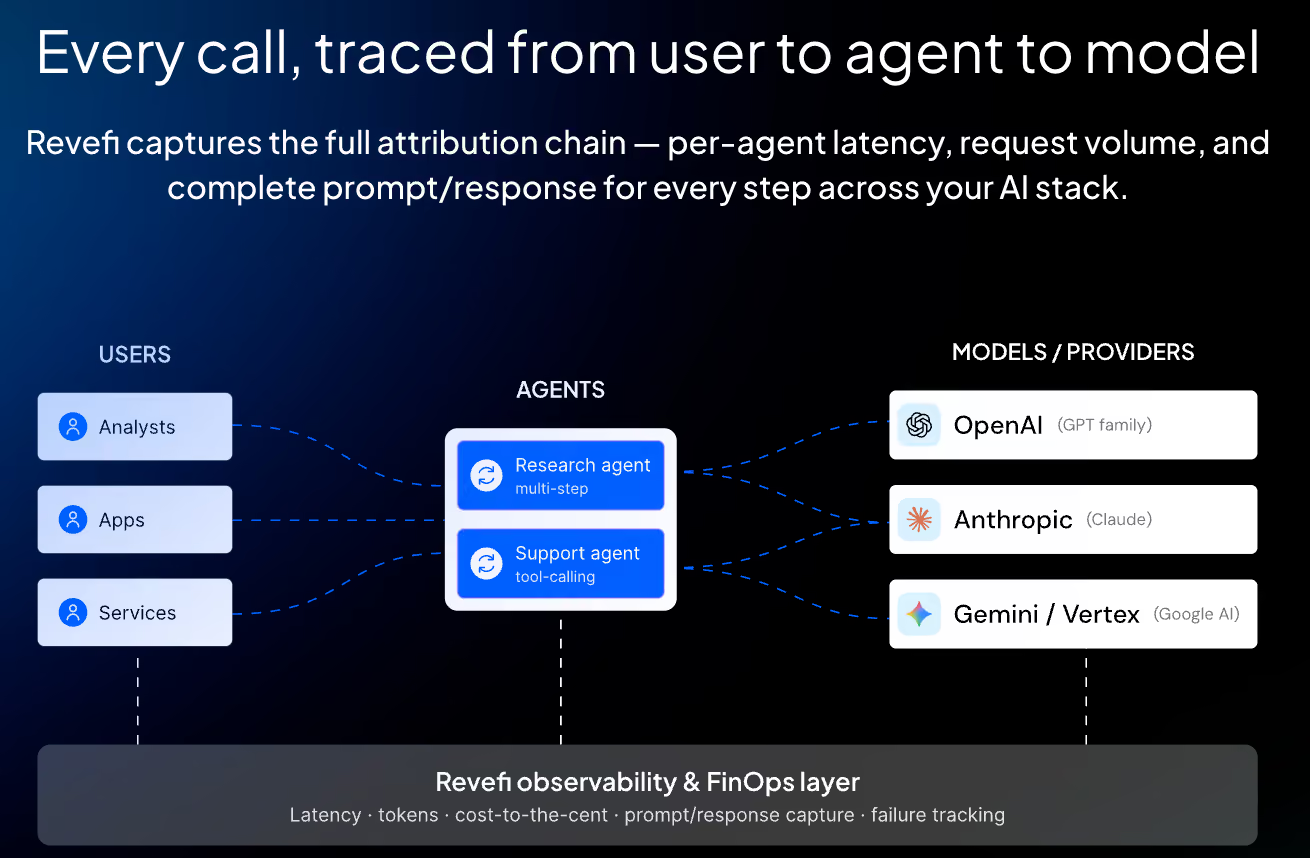
Booth traffic was steady, and the conversations were the ones we hoped for, because the problems we focus on, runaway data spend, silent quality issues, and performance bottlenecks, are already on the agenda for these teams. Watching the Revefi solution surface cost anomalies and data quality issues in minutes resonated, especially at an event built on the premise that AI agents need trusted, well-governed, cost-controlled data underneath them. The most common reaction was some version of: “This is the operating layer the keynotes assume you already have.”
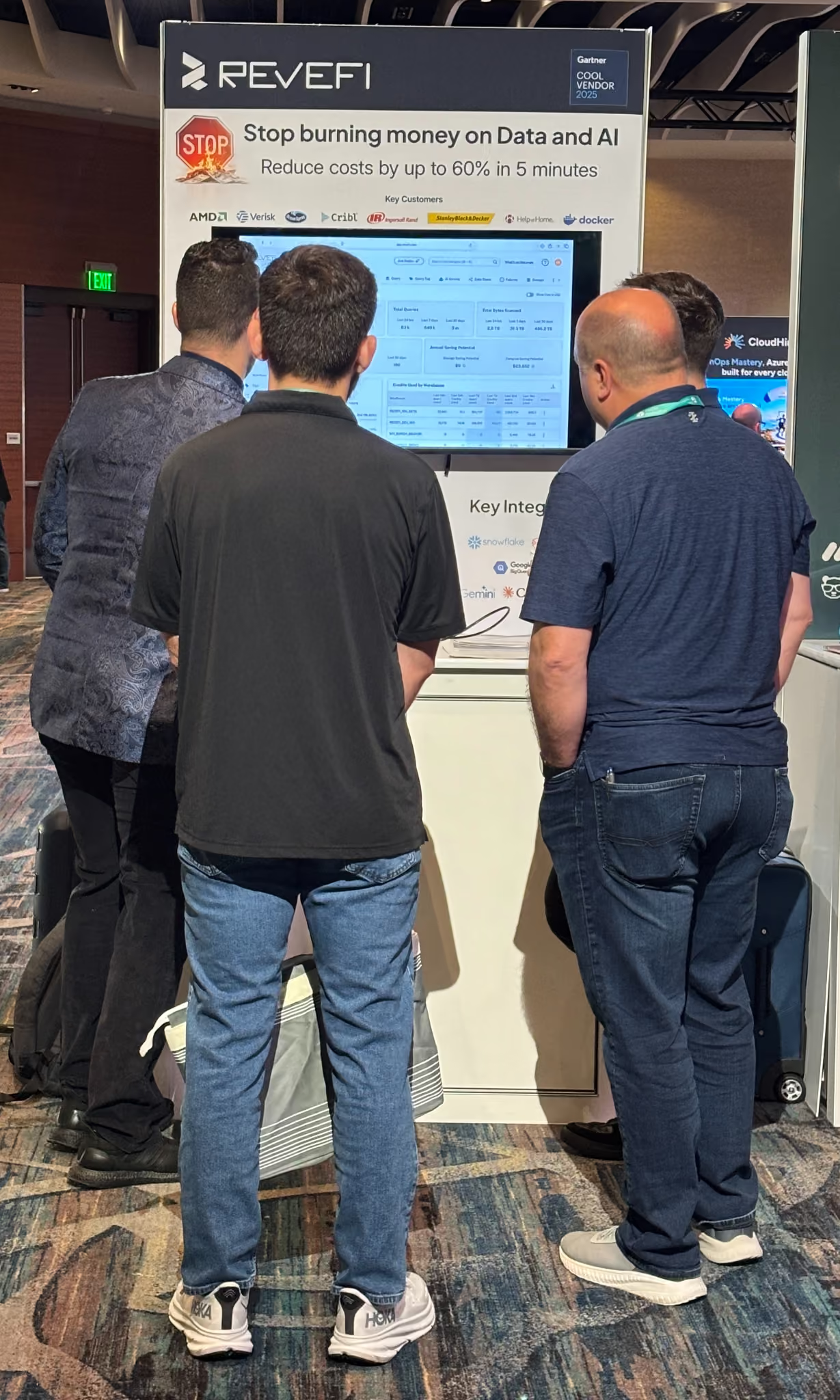
The token economics conversation was a natural fit too. The same discipline FinOps X applied to model and inference spend is the one we apply to data platform consumption, and Revefi’s work on AI token economics sat right in the middle of where the two worlds are converging.
How Revefi fits the FinOps ecosystem
If the dominant message of FinOps X 2026 was that the agentic, AI-driven enterprise runs on spend you can attribute, govern, and optimize, then Revefi sits squarely on that foundation. The Foundation announced the standards, the certifications, and the open formats up top. Our job is the layer beneath, continuously and autonomously monitoring cost, quality, performance, and operations across Snowflake, Databricks, and Google BigQuery, so the data feeding AI agents stays trustworthy and the consumption powering them stays predictable.
As FinOps expands beyond the cloud into data platforms and AI, the unglamorous foundation of data trust and cost control is what makes the rest of it workable. The more the market leans into agents and token-based spend, the more that foundation matters.
Final thoughts
For the first FinOps X, this was a great one to attend. The discipline has visibly outgrown its cloud-cost-management origins, and the community is being candid about the fact that AI and token economics have changed the game faster than the tooling could keep up. The vendors with a real future here aren’t the ones with the slickest natural-language demo; they’re the ones with a governed, allocation-aware data model underneath it.
I came away energized, and convinced that the practitioners doing this work already understand the assignment: connect technology to real business value, and don’t hand an autonomous agent the keys to data you can’t account for. Thanks to everyone who stopped by the booth, and let us keep the conversation going.