Last week, I officially wrapped up my fifth Snowflake Summit. Hosted at the Moscone Center in San Francisco, the summit serves as a good barometer to understand where the Snowflake ecosystem is heading in 2026.
This year the needle firmly pointed in one direction: The Agentic AI Enterprise.
According to Snowflake, more than 20,000 people attended the 2026 Summit where Snowflake used the stage to announce 26+ new capabilities. But the volume of launches mattered less than the through-line connecting them. Here are a few of my takeaways, both on what Snowflake announced and on what it felt like to be there as an attendee and sponsor.
1. Key announcements by Snowflake
One key takeaway came from Snowflake CEO Sridhar Ramaswamy's keynote, which went like: "The model is not your unique advantage. It's when you combine models with your data, things begin to shine." Nearly every announcement was in service of that thesis, attempting to make enterprise AI real by grounding it in governed data, semantic context, and verified identity.
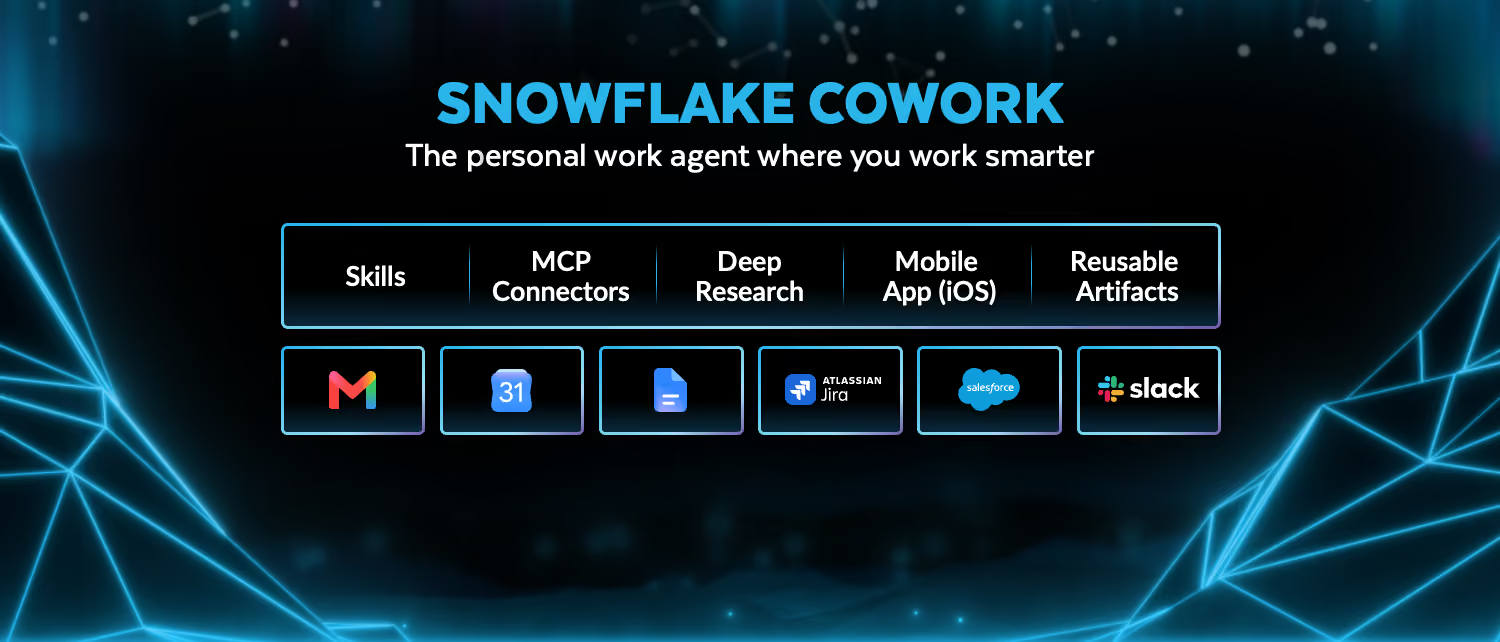
Few announcements stood out to me:
a) An agentic strategy, with new names:
Snowflake Intelligence is now CoWork, positioned as the personal agent that helps knowledge workers work smarter, with new capabilities like Artifacts, Cortex Sense, and Deep Research that move teams from reactive insights to proactive action. Cortex Code is now CoCo, a Snowflake-native coding agent now available as a desktop app and through extensions for Microsoft Excel, VS Code, and Claude Code, so builders can work wherever they already are. There has been an ongoing stream of jokes regarding “CoCo”.
b) Horizon Context:
Horizon Context provides the context layer for AI and BI so that, in Snowflake's words, "every person, tool, and AI agent operates from the same trusted business context" collecting business logic across the data estate, maintaining it automatically with capabilities like Semantic Studio, and extending it to external agents and BI tools. A bit of a catch-up, noteworthy nevertheless..
c) Open, real-time, self-tuning infrastructure:
Several launches pushed Snowflake are indications to be more open and adopt automation: general availability of Apache Iceberg v3 with bi-directional Polaris writes, letting teams work on a single, live, governed copy of their data wherever it resides without moving or duplicating it; Snowflake Datastream for piping live Kafka feeds in with sub-second queryability; and Adaptive Compute, which Snowflake benchmarks at up to 1.6x faster analytics, 2.2x higher throughput, and 3.5x faster execution on DML-heavy workloads, with no manual tuning. Note: Revefi’s testing of Adaptive Compute was not as representative as indicated in the Snowflake claims,
d) Security built for agents:
With agents acting autonomously, Snowflake leaned into Agent Identity and AI Security Posture Management, giving each agent a verified identity and a full audit trail before it can touch enterprise data a direct answer to the McKinsey finding Snowflake cited that nearly two-thirds of organizations rank security as the top barrier to scaling AI.
e) Ambitious partnership and M&A signals:
Snowflake announced its intent to acquire Natoma, an enterprise Model Context Protocol (MCP) platform by signing a five-year contract. It also gained a US$ 6 billion infrastructure commitment with AWS (covering Graviton and AI compute), and deepened its Anthropic relationship for Claude (powering both CoWork and CoCo). It’s important to note that Snowflake highlighted that Cortex Code has become its fastest-growing product ever. Anthropic President Daniela Amodei co-keynoted the speech alongside Snowflake CEO Sridhar Ramaswamy.
2. My experience attending the sessions
I attended the opening keynote and a few breakout sessions. The breakout sessions were kind of informative, but were mostly a bit high level.
The keynote saw the stage being shared by Snowflake CEO Sridhar Ramaswamy, and Anthropic Co-CEO Daniela Amodei, which served as a reminder of how tightly the data and LLM frontier worlds have converged. Ramaswamy's four building blocks:
- Enterprise Data and Context
- AI Models
- Applications
- Agentic Control Plane)
Gave the whole event a mental model to hang everything on.
The Cortex and AI agents sessions were more practical in nature. Seeing CoWork answer real business questions over governed data (as well as CoCo generate and reason about pipelines) made the agentic story more tangible rather than aspirational!
The recurring caveat in nearly every session was the same, though: Agents are only as good as the context and guardrails behind them.
Note:
Revefi’s autonomous agent RADEN is a good aly for Snowflake data practitioners and in my opinion gives better actionable insights and outcomes.
3. Meeting data practitioners
Honestly, the hallway conversations were far better than the sessions in my opinion. This summit is one of the few places where you can talk to a few dozen data leaders in a single afternoon, and the candor was refreshing!
Consistent with our data, the cost of running Snowflake warehouses, and Cortex Agent (now known as CoCo) was the number one issue. Spend anxiety, and bill shock is real! As AI workloads grow, so do bills. Teams are under more pressure than ever to show ROI for every Snowflake credit consumed.
Secondly, everyone is experimenting with agents, but few are running them in production. As a result, the gap between the two is almost always governance, trust, and cost.
Third, data quality often emerges as the quiet blocker. More than one practitioner told me different iterations of the same problem: "We can't put an agent in front of data we don't trust."
4. The Revefi experience as a sponsor
Being on the sponsor side of the summit gave me a different vantage point: less time in sessions than I would have hoped for, but more time talking to the people actually doing the work.
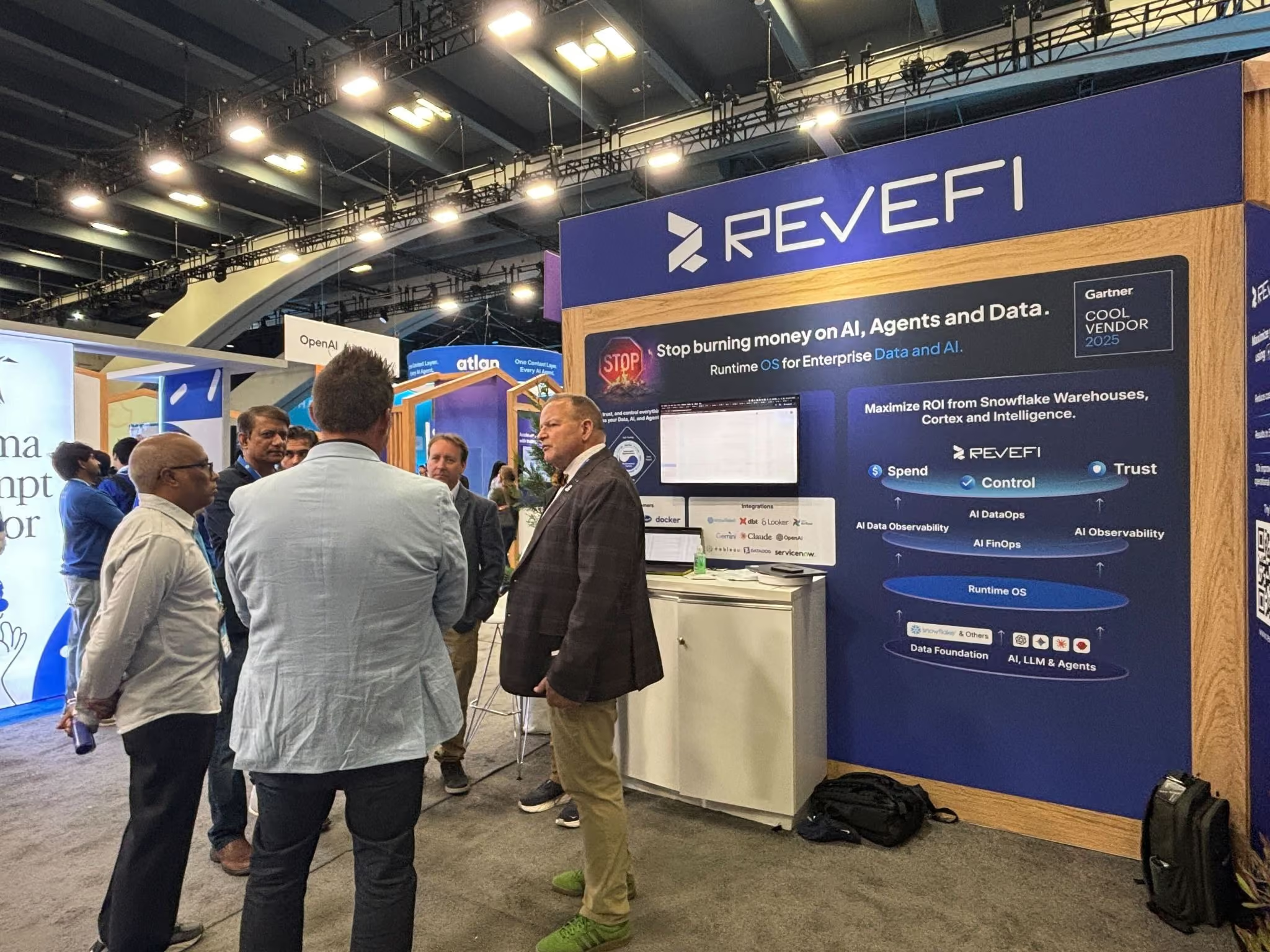
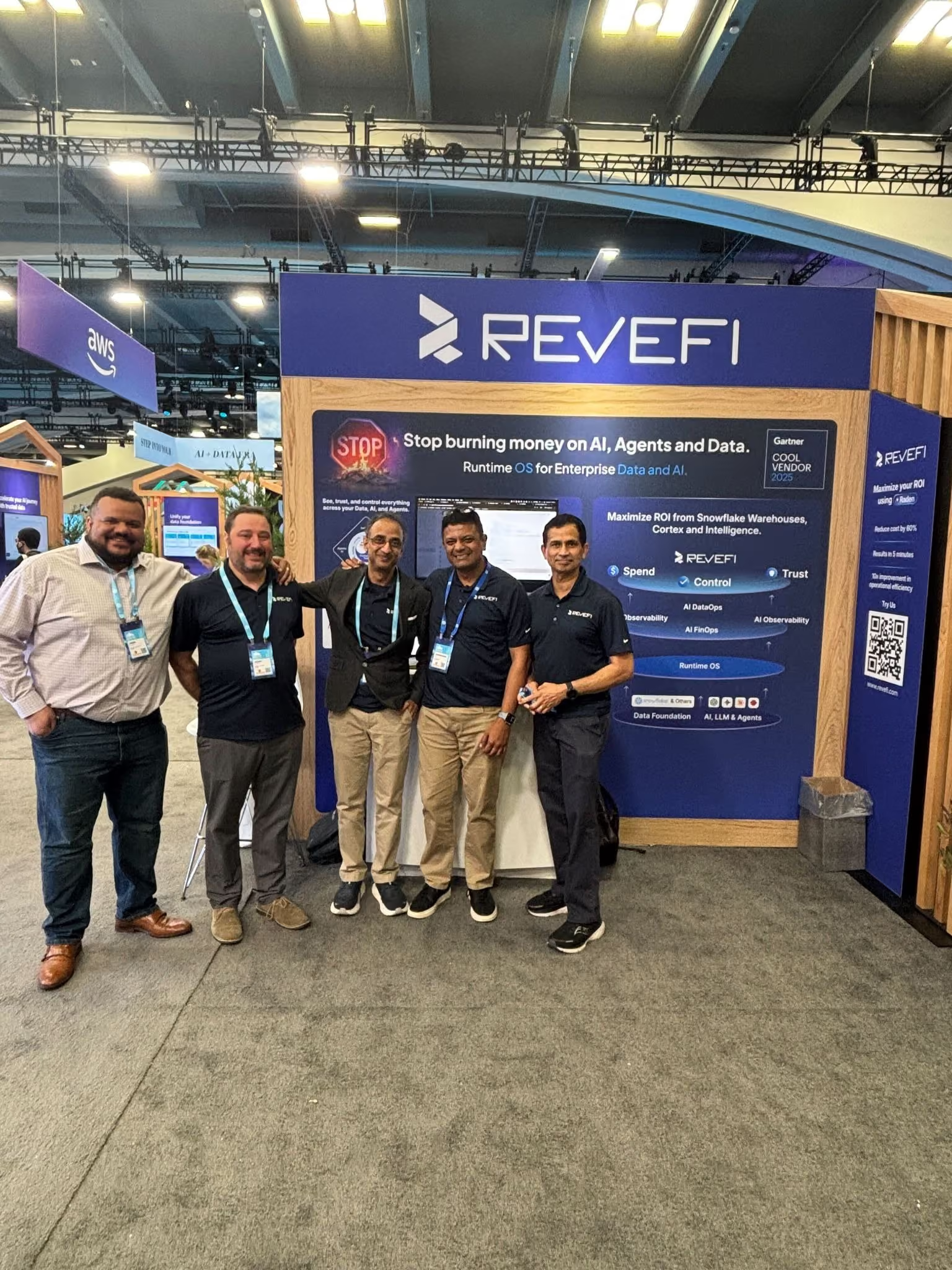
At the booth, traffic was steady, and the conversations were exactly the ones I hoped for. People stopped and engaged with the Revefi team because the pain-point we addressed (runaway data spend, silent quality issues, and performance bottlenecks) is on the top of every C-suite leader’s mind right now.
Watching our AI agent for Snowflake surface cost anomalies and data quality issues within minutes resonated, especially with the summit heartbeat that focused on how agents need trusted, well-governed data underneath them. The most common reaction was some version of: "This is the operational layer everyone on the main stage assumes you already have."
We announced AI DBA for Snowflake to Manage, Optimize, and Operate Cloud Data Platforms which was the standout topic in the 100+ demos over the 4 days.
5. The Data Leader Dinner, Hosted by Revefi
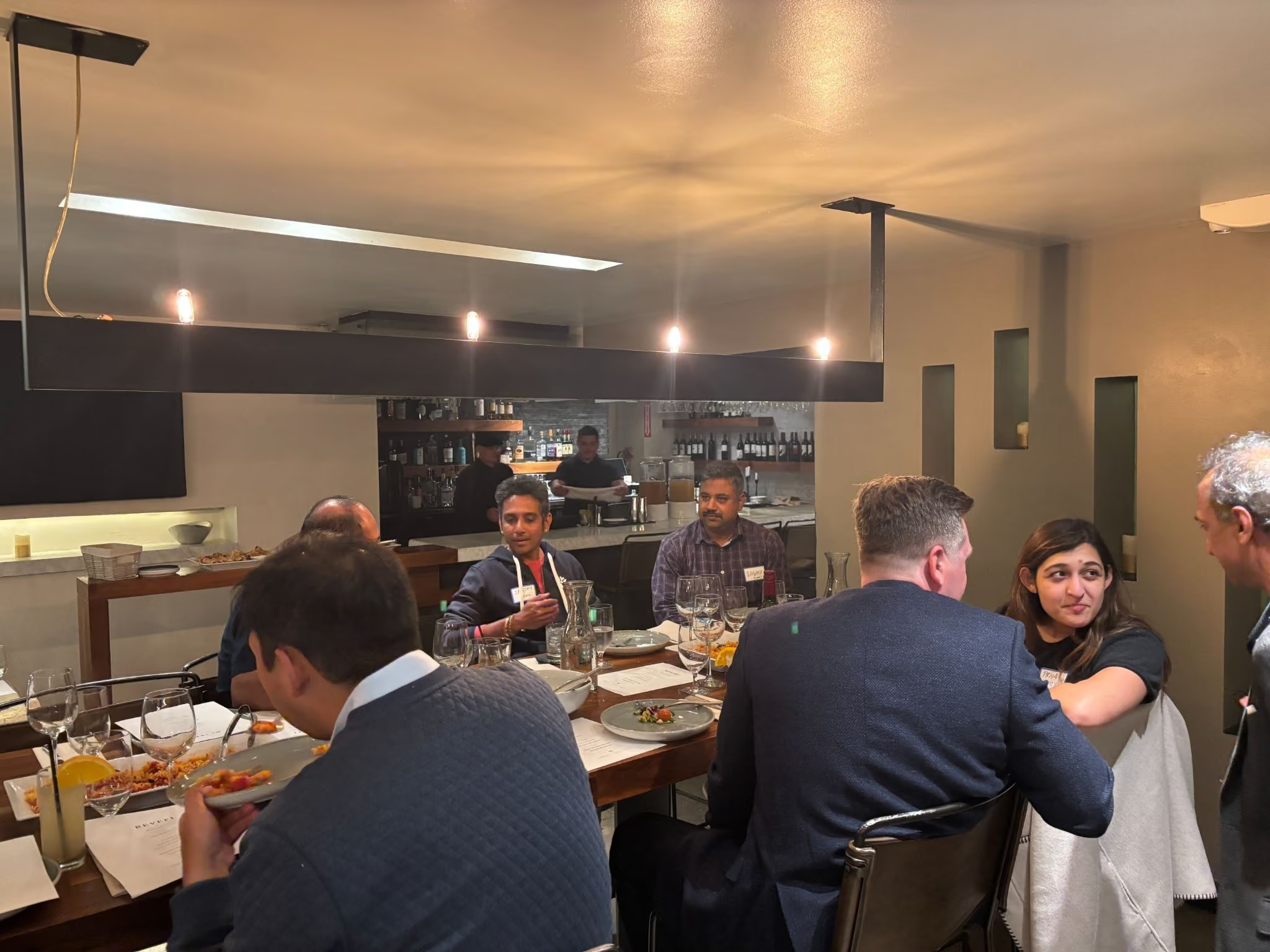
Hosting our dinner was the highlight of the Summit experience for me. Away from the noise of the expo floor, the conversation went deep, covering pressing topics such as:
- How are teams actually budgeting for AI workloads?
- Where FinOps and data observability are converging?
- How to build trust in data before handing it to autonomous agents?
There's a different kind of honesty that comes out over dinner, and the candor in that room was a gift. We had CDO/CDAOs, VPs of Data, VPs of Analytics, VP of AI, and Data Platform owners at our dinner.
How does Revefi fit the Snowflake Ecosystem? If the dominant message of the Snowflake Summit 2026 was that the agentic enterprise runs on trusted, governed, cost-controlled data, then Revefi sits squarely on that foundation.
Snowflake announced an impressive layer of agents, context, and security up top. Our job is the layer beneath it, by continuously monitoring cost, quality, performance, and operations autonomously, so that the data feeding those agents is trustworthy and that the Snowflake credit consumption powering them stays under control.
The more the industry leans into agents, the more that foundation matters, and that's a tailwind we felt in every conversation.
Final thoughts
The Snowflake Summit 2026 made a confident bet, which was that the winners in enterprise AI won't be the ones with the flashiest model, but the ones who can ground AI in data they trust, context that's consistent, and controls that hold up in production.
I came away energized, both by where the platform is heading and by how clearly the practitioners I met understand that the unglamorous foundation of data trust and cost control is what makes the agentic future real.
Thanks to everyone who stopped by the booth and joined us for dinner, and let's keep the conversation going!