
Estimate your monthly and annual Databricks costs from DBU usage. Simple, factual, based on published list rates.
A DBU is a normalized unit of processing capability. Every supported instance type carries a DBU rating, and a cluster's hourly consumption is the sum of its driver and worker node ratings. Because billing is per second, short-lived job clusters cost dramatically less than always-on interactive clusters doing the same work.
Your effective rate depends on workload type, pricing tier (Premium or Enterprise, since the Standard tier has been retired), cloud provider, region, and any committed-use discounts.

Rates as of July 2026; they vary by cloud, region and tier. Always confirm current rates on the official Databricks pricing page.
The elasticity that makes Databricks powerful also makes it easy to overspend: each leak inflates both DBU fees and cloud infrastructure charges.
How Revefi Reduces Databricks Costs Automatically
Revefi's AI DBA deploys specialized agents for Databricks (FinOps, observability, quality, spend optimization, performance tuning and governance) via a read-only, metadata-only integration that sets up in about 5 minutes.
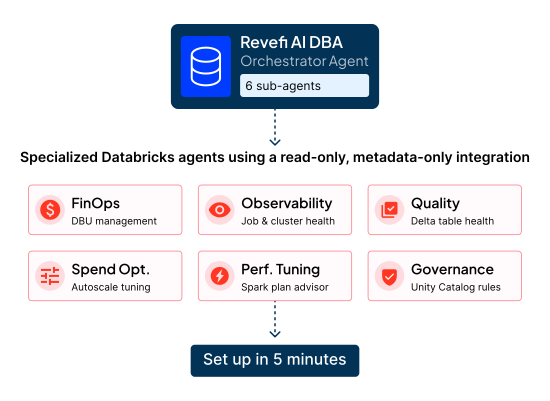
Revefi's AI agents find where your Databricks spend is leaking, in minutes, not months.
