.avif)
As a fully managed cloud data warehouse, Snowflake delivers elastic compute and near-unlimited scalability. However, its consumption-based pricing model means that unexpected spikes in daily credit usage can quickly drive up costs.
These cost anomalies (which are sudden deviations from normal spending patterns) often indicate inefficient queries, misconfigured workloads, or uncontrolled resource usage. To address this challenge, Snowflake introduced Cost Anomalies capability which became generally available on December 10, 2025.
This feature monitors usage trends and flags irregular spending patterns across warehouses, accounts, and workloads. By replacing manual cost tracking with automated detection, organizations gain faster visibility into unusual activity.
Basic cost anomaly detection alone is not enough for sustainable cost governance. True optimization requires visibility, context, and intelligent automation.
Drawing from official Snowflake documentation and platform capabilities, in this blog we cover how Snowflake’s cost anomaly detection works, and how AI-powered Data Observability enhances proactive cost management to strengthen financial oversight.
Understanding Cost Anomalies in Snowflake
Cost anomalies in Snowflake refer to instances where daily consumption (measured either in Snowflake credits or currency) deviates from the expected range based on historical patterns.
Anomalies are categorized at two levels:
Account-level:
Account-level anomalies focus on a single account's deviations, such as a sudden increase in compute credits from a rogue workload.
Organization-level:
Organizational anomalies aggregate data across all accounts in an organization, flagging overall irregularities.
For example, a spike in one account might be offset by a dip in another, so no organization-wide alert triggers. However, Snowflake provides tools to drill down into contributing accounts with the largest changes.
This granularity is essential for large enterprises managing multiple accounts.
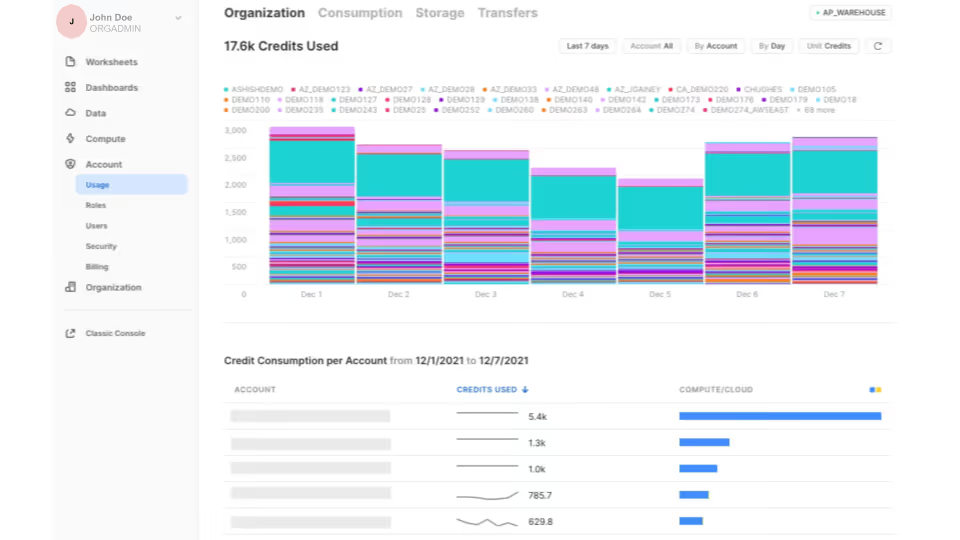
Data is accessible via views in Snowflake's schemas. These views include daily consumption metrics, anomaly status, and tools for root cause analysis, like identifying top contributors to spikes.
However, access to currency views requires specific roles (tying directly into access control mechanisms).
The Role of Access Control in Managing Cost Anomalies
Access control is the gatekeeper for cost anomaly features in Snowflake, ensuring sensitive financial data is viewed and managed only by authorized users.
Prior to enhancements announced on November 17, 2025, only system administrators could access these insights. Now, application roles within the Snowflake application democratize access, allowing finer-grained permissions without compromising security.
Organization-level access requires combining these with:
- ORGANIZATION_BILLING_VIEWER (for organization accounts)
- APP_ORGANIZATION_BILLING_VIEWER (for ORGADMIN-enabled accounts), unlocking currency views and cross-account visibility.
Granting access is straightforward via SQL.
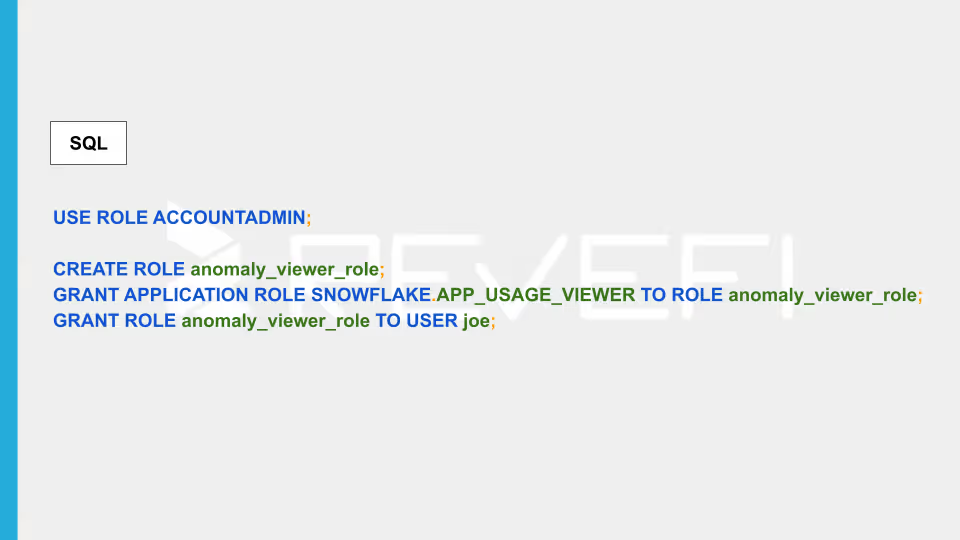
For configuration, swap in APP_USAGE_ADMIN. In real-time scenarios, this means finance teams can monitor without full admin rights, while admins configure alerts to flag issues instantly via email, reducing response times from days to hours.
Access control integrates seamlessly with data observability, ensuring AI-driven insights are delivered securely to the right stakeholders, fostering a collaborative approach to cost management.
Data Observability Powered by Agentic AI: Changing The Game With AI Observability
At the heart of Snowflake's anomaly detection is AI-powered data observability, which uses agentic AI solutions to monitor data flows and usage patterns to uncover hidden issues.
Snowflake’s built-in cost anomaly detection uses a machine learning algorithmic approach for time-series analysis. The ANOMALY_DETECTION function employs a Gradient Boosting Machine (GBM) algorithm (a form of machine learning) to train models on historical data, which forecasts expected values and flags outliers.
In the wake of this more traditional approach to monitoring cloud data costs and performance, AI-powered observability handles complex, multi-series data (e.g., per-warehouse costs) without manual tuning, or intervention. In other words, the Agentic AII layer addresses issues in real-time by enabling continuous monitoring.
Agentic AI complements the native cost anomaly monitoring and detection exercise by offering customizable, and deeper insights such as feature importance to pinpoint why costs spiked (e.g., due to specific lags or external factors).
Scalability For Large Enterprises: Revefi Data Cost Optimization
Revefi' serves as an autonomous, zero-touch solution that significantly enhances Snowflake cost anomaly management and real-time issue mitigation.
Unlike Snowflake's native tools (which only provides algorithmic detection of daily anomalies), Revefi delivers observability solutions for cost, performance, data quality, and usage patterns across Snowflake environments.
The Revefi solution continuously monitors for pressing cost anomalies, such as:
- Workload spikes
- Inefficient queries (e.g., excessive SELECT * or bad joins)
- Failed queries that waste Snowflake credits
- Idle warehouses
And it goes beyond mere detection by implementing preventative measures automatically, like:
- Right-sizing warehouses
- Auto-pausing idle resources
- Optimizing query patterns

By implementing Revefi's AI Agent for Cloud Cost Optimization, Verisk reduced Snowflake warehouse costs by over 60% and boosted operational efficiency by 10x.
Read the full case study
By integrating automated FinOps, DataOps, and Data Observability, Revefi unifies cost and performance workflows by flagging anomalies tied to data quality issues that indirectly inflate costs, predicts spending trends, and enforces governance without manual intervention (e.g., schema changes that are breaking pipelines).
Revefi also complements Snowflake's access controls mechanisms by providing role-appropriate alerts and recommendations, enabling faster root-cause analysis and resolution (often within minutes).
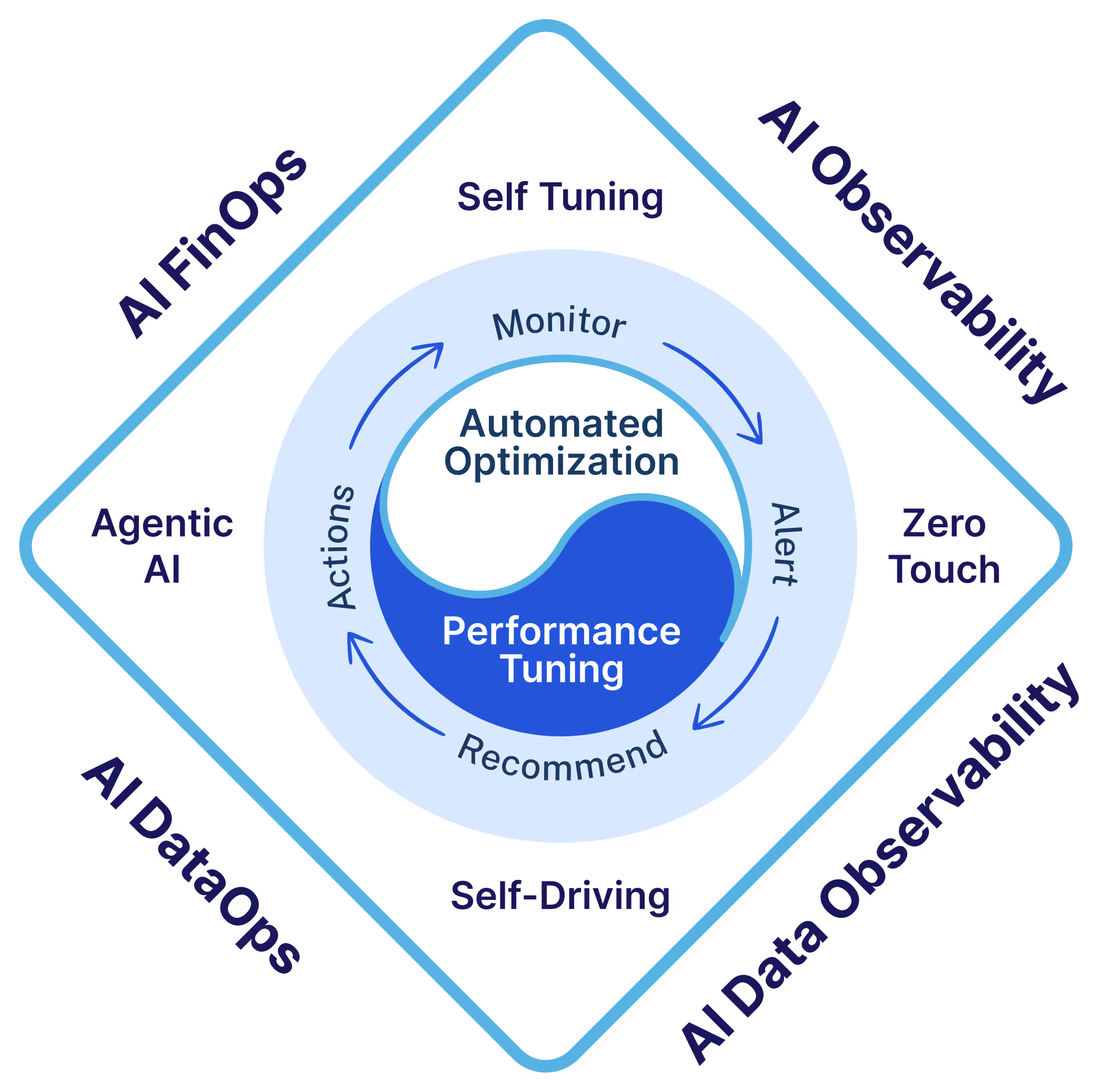
With the implementation of Revefi’s AI observability solutions across native Snowflake monitoring tools, businesses can transform cost management from a reactive measure to a more proactive function.