
The rapid migration of enterprise workloads to modern analytical platforms has shifted the operational burden from physical database administration to complex cloud cost management and workload orchestration. Modern analytical infrastructure platforms like Snowflake, Databricks, and Google BigQuery offer virtually limitless elasticity. However, this architectural freedom introduces significant financial risk.
When compute capacity scales seamlessly with a single SQL query, architectural inefficiencies transform directly into runaway operational expenses.
“...80 percent of enterprise data operations teams report budget overages directly driven by unpredictable analytical query execution patterns and unmonitored compute scaling.”
Gartner
Engineers and database architects frequently struggle to maintain optimal execution speeds without breaching strict quarterly cloud infrastructure budgets. Traditional, manual database administration practices are structurally unequipped to handle the microsecond-scale auto-scaling, dynamic query plans, and serverless pricing models of the modern cloud data ecosystem.
Achieving long-term performance stability and fiscal governance requires moving beyond manual tuning scripts and static query monitoring. Autonomous optimization platforms like Revefi, powered by machine learning algorithms that continuously assess workload metrics, represent the next evolutionary phase of data operational management.
The Realities of Modern Data Warehousing
Modern cloud data warehouses have decoupled storage from compute, allowing teams to isolate workloads, run concurrent analytics, and ingest real-time telemetry at scale. However, each underlying architecture charges for compute resources through distinct paradigms:
Snowflake uses a virtual warehouse model billed in credits per second, where under-optimized concurrency or forgotten auto-suspend parameters cause continuous billing accrual. On the other hand, Snowflake Adaptive Warehouses mitigate continuous billing accrual by dynamically resizing and applying fine-grained auto-suspend policies based on real-time concurrency and idle query detection.
Databricks charges based on Databricks Compute Units (DBUs) alongside underlying cloud virtual machine costs, where poorly managed executor nodes during distributed Spark jobs directly inflate operational expenditure
Google BigQuery utilizes a mixed model of slot-based auto-scaling capacity or on-demand byte-scanned pricing, where unpartitioned or unclustered tables read terabytes of unnecessary data during simple ad-hoc analytical queries.
Without proactive execution oversight, a single poorly constructed cross-join or an unindexed full table scan can drain thousands of dollars from a company's operational budget in minutes.
“...organizations frequently lack visibility into cloud cost drivers and struggle to manage the resulting financial risks, which is why it recommends FinOps-based cost visibility and anomaly detection.”
Gartner
How Autonomous AI DBAs Make a Difference in Performance Optimization
An Autonomous AI Database Administrator (or AI DBA for short) operates as a continuous, intelligent control plane sitting above the analytical layer. Rather than relying on static dashboard alerts or reactive, post-billing retrospectives, an AI DBA processes query logs, execution profiles, system metadata, and data lineage in real time.
By applying deep learning models, natural language parsing, and predictive heuristics directly to execution plans, the autonomous engine continuously identifies performance bottlenecks and executes remediation paths without requiring human intervention.
Abstract Syntax Tree (AST) and Execution Graph Analysis
Every query submitted to platforms like Snowflake or Google BigQuery is translated by the query engine into an execution graph. The AI DBA analyzes the Abstract Syntax Tree (AST) and operator-level execution telemetry of incoming queries.
The AI DBA evaluates key metrics, including:
- Spill rates to remote or local disk: Identifies queries where memory allocation is insufficient for sorting or hash join operations.
- Data pruning efficiency: Measures the ratio of partitions scanned versus partitions referenced in filter conditions.
- Join explosion factors: Detects unexpected cardinalities resulting from missing join constraints or non-unique keys.
By analyzing historical query execution plans, the autonomous engine detects recurring inefficient patterns across various enterprise business intelligence tools and data transformation pipelines.
Algorithmic Query Plan Restructuring
Once inefficient patterns are flagged, the AI DBA suggests or programmatically applies structural query rewrites. This includes introducing optimal Common Table Expressions (CTEs), replacing costly subqueries with optimized window functions, and eliminating redundant aggregations.
For heavy analytical engines, such as Databricks running complex Spark SQL transformations, the AI DBA dynamically identifies opportunities to alter join strategies, thereby transitioning expensive shuffle sort-merge joins into broadcast hash joins when dataset metrics satisfy optimal memory thresholds.
Optimizing Query Performance Across Ecosystems
Different analytical platforms feature unique execution models. The autonomous engine tailors its tuning methodologies to target the specific operational mechanics of each system.
Micro-Partitioning and Virtual Warehouse Right-Sizing for Snowflake
Snowflake organizes data into immutable, encrypted micro-partitions. Query efficiency on this architecture relies almost entirely on effective partition pruning.
When tables grow to multi-terabyte scales, natural ingestion order rarely matches ad-hoc query access patterns. The AI DBA continuously monitors table access logs to evaluate partition pruning ratios. When the pruning efficiency ratio falls below acceptable thresholds for critical workloads, the system automatically determines the optimal selection of clustering keys based on actual filter predicate usage across historical query runs.
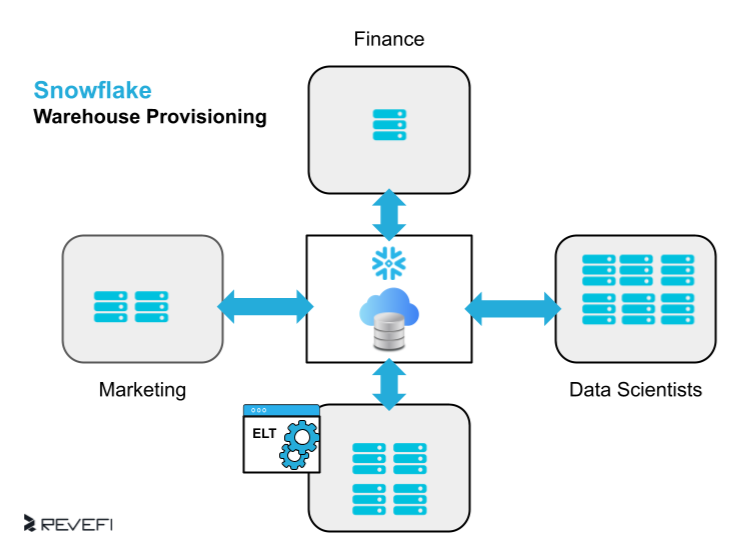
Furthermore, the autonomous engine monitors Snowflake virtual warehouse utilization profiles. Instead of allowing developers to assign fixed medium or large compute clusters to sporadic reporting jobs, the engine dynamically right-sizes virtual warehouse allocations. It adjusts multi-cluster auto-scaling policies, ensuring additional warehouse instances spin up only during high concurrency spikes and immediately auto-suspend the moment queue lengths return to baseline.
Delta Lake Optimizations and Spark Engine Tuning across Databricks
In Databricks environments, performance bottlenecks frequently stem from file management issues within the underlying cloud object store, such as the small-file problem, along with suboptimal Spark configurations.
The AI DBA tracks file size distribution within Delta Lake tables and continuously orchestrates background execution of optimized file layout commands. Key tuning actions include:
- Liquid Clustering and Z-Ordering: The engine evaluates high-cardinality search predicates and dynamically schedules clustering runs to co-locate related data within the same physical Parquet files.
- Auto-Compaction Scheduling: The system automatically consolidates thousands of tiny files into uniform 1 Gigabyte target file sizes, eliminating metadata lookup overhead on the Spark driver node.
- Photon Engine Resource Allocation: The engine identifies high-cost vectorizable SQL workloads and automatically routes them to native C++ vectorized Photon execution nodes, while steering basic linear transformations to low-cost standard compute pools.
Google BigQuery: Slot Allocation and Partitioning/Clustering Alignment
Google BigQuery abstracts server management entirely, billing users based on scanned bytes or slot consumption over time. In on-demand pricing models, an unoptimized query scanning multi-terabyte tables can instantly consume vast portions of a budget.
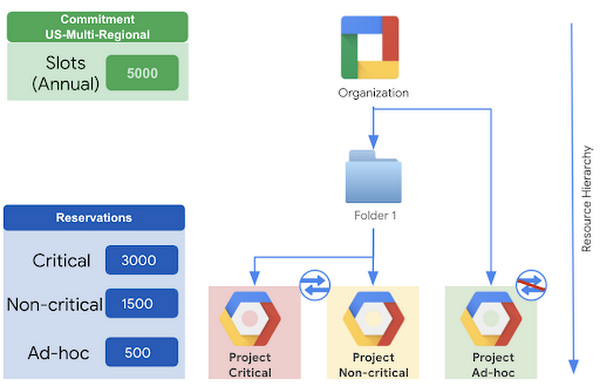
The AI DBA integrates deeply with Google BigQuery metadata systems to eliminate redundant data scanning through several structural mechanisms:
- Partition and Cluster Recommendation: The AI DBA evaluates all incoming SQL queries targeting unpartitioned tables, identifying high-frequency WHERE and GROUP BY parameters. It then provides automated DDL migration scripts to convert tables into partitioned and clustered structures.
- Dynamic Slot Allocation: For enterprises utilizing Google BigQuery flat-rate or capacity-based editions, the AI DBA balances reservation assignments. It dynamically shifts slot capacity between background transformation pipelines and real-time interactive business intelligence dashboards based on hourly usage forecasts.
- Materialized View Generation: The engine identifies recurring aggregate sub-expressions across separate user queries and automatically creates managed materialized views, avoiding expensive full-table scans.
Mechanisms for Automated Performance Tuning: Understanding How the AI DBA Works
Achieving consistent database optimization without introducing operational degradation requires a multi-tiered technical architecture. An enterprise AI DBA framework uses systematic control loops to continuously refine system performance.
Continuous Metric Ingestion and Anomaly Detection
The foundation of modern database optimization is pervasive telemetry capture. The AI DBA continuously ingests:
- System-level performance metrics, such as CPU utilization, queue duration, and local or remote disk spill volumes
- Root-Cause Analytics (RCA) when alerts on Service Level Agreements (SLAs) on queue duration, utilization, and similar metrics are breached, or start turning critical
- Granular query history logs, including executed SQL text, compile time, execution duration, and bytes scanned
- User, role, and application session context to attribute resource consumption to specific business units
When a scheduled ETL job or an ad-hoc dashboard query strays from its expected resource signature, the anomaly detection engine immediately flags the deviation for remediation. Also, the AI DBA reduces alert noise by adapting to business context and eliminating redundant notifications for recurring breaches.
Automated Right-Sizing and Cost Optimization
To prevent runaway infrastructure costs, the AI DBA pairs real-time query optimization with rigorous resource governance:
- Idle Compute Elimination: Auto-suspend settings are frequently set too conservatively by platform administrators. The AI DBA analyzes query arrival patterns to fine-tune auto-suspend timeouts down to the ideal operational threshold, eliminating costly idle capacity without increasing cold-start latency for end-users.
- Concurrency Scaling Governance: Instead of allowing compute warehouses to auto-scale horizontally to maximum limits during minor concurrency spikes, the engine dynamically caps cluster scaling limits based on real-time queue depth analysis, preventing unnecessary provisioning of auxiliary compute nodes.
- Dead-Code and Abandoned Table Cleanup: The AI DBA correlates table access logs with data lineage graphs to surface cold data assets (such as tables, views, and staging schemas) that have not been queried for months. It automates retention policies, moving cold assets to cheap archive storage or dropping orphaned intermediate transformation tables entirely.
- Failed Query Spend Analysis: Recurring syntax errors, timeout aborts, and upstream schema mismatches silently burn compute credits before jobs can complete. The AI DBA monitors execution failures in real time, isolating systemic code regressions and anomalous runaway queries to stop continuous retries and protect budgets from unproductive compute spend.
- Warehouse Consolidation and Idle-Time Maximization: Fragmented workloads across dedicated, underutilized clusters lead to redundant baseline compute costs. The engine maps cross-team usage profiles and execution schedules, safely co-locating complementary query workloads onto shared warehouses to drive higher sustained utilization and capture latent capacity without introducing queue friction.
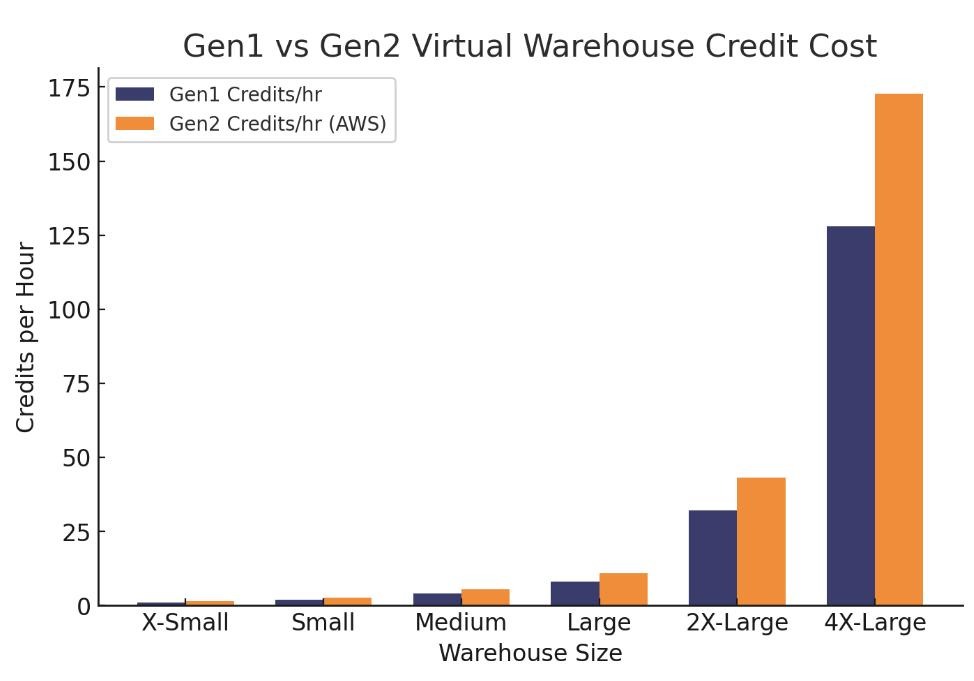
- Next-Gen Compute and Feature Modernization: Cloud data platforms frequently release architectural upgrades that outpace manual evaluation. The AI DBA continuously models historical workload traces against new engine capabilities across Snowflake, Databricks, and BigQuery, recommending targeted migrations that maximize price-performance.
Engineering Best Practices for Integrating AI Database Administrators
Deploying an autonomous database tuning engine into production cloud data environments requires careful planning around security, governance, and operational control.
1. Implement Role-Based Least-Privilege Access
An AI DBA platform should interface with your data infrastructure through tightly scoped service accounts. Use native cloud IAM roles to restrict write permissions. Grant administrative privileges exclusively to metadata catalogs and queue management interfaces while enforcing strict read-only restrictions on underlying business payload data.
2. Establish Automated Guardrails
When enabling automated remediation, implement guardrail policies to maintain control over autonomous system changes:
- Set maximum compute limits for auto-scaling adjustments.
- Require explicit human approval for destructive schema alterations, such as dropping unreferenced tables or changing column types.
- Define restricted operational windows for compute-intensive optimization tasks, like deep table re-clustering or compaction.
3. Integrate Performance Insights into CI/CD Pipelines
Connect the AI DBA engine directly into your data build pipelines. By analyzing query performance during staging deployments, the engine can flag unoptimized SQL transformations, missing partition filters, or high disk spill risks before code is merged into production environments.
The Future of Autonomous Cloud Data Infrastructure with Revefi's AI DBA
The enterprise data landscape is evolving at a pace that renders manual, reactive database administration obsolete. As analytics and AI model training converge across platforms like Snowflake, Databricks, and Google BigQuery, maintaining fine-grained control over cloud expenditure becomes critical.
An AI Database Administrator bridges the gap between infrastructure elasticity and financial predictability.
By continuously parsing execution plans, right-sizing compute allocations, restructuring inefficient queries, and automating data layout management, autonomous tuning frameworks ensure that organizations maximize performance per compute dollar. Embracing AI-powered database governance transforms cloud data management from a constant battle against unexpected overages into a streamlined, highly predictable operational driver.