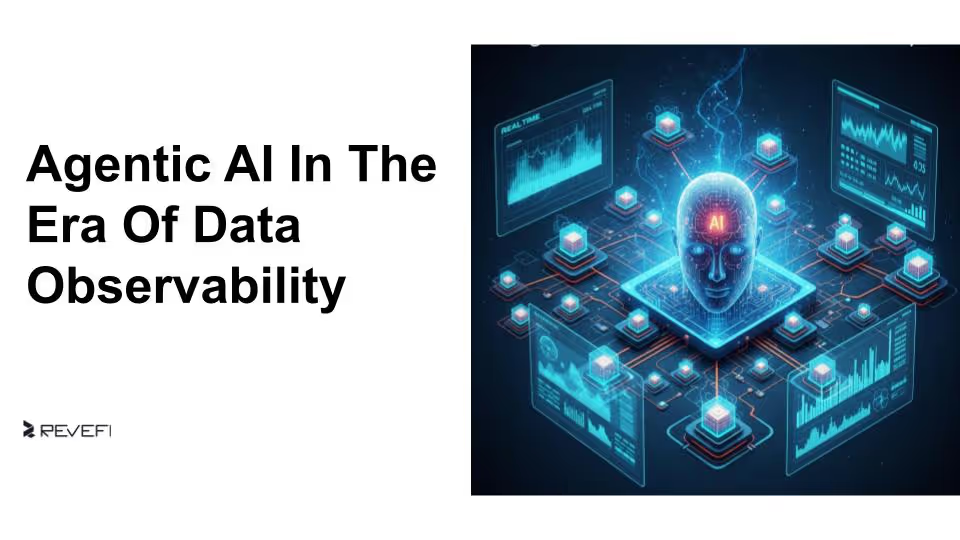
Agentic AI marks a significant evolution in the way organizations tackle DataOps automation, data handling, real-time data observability, data cataloging, and governance.
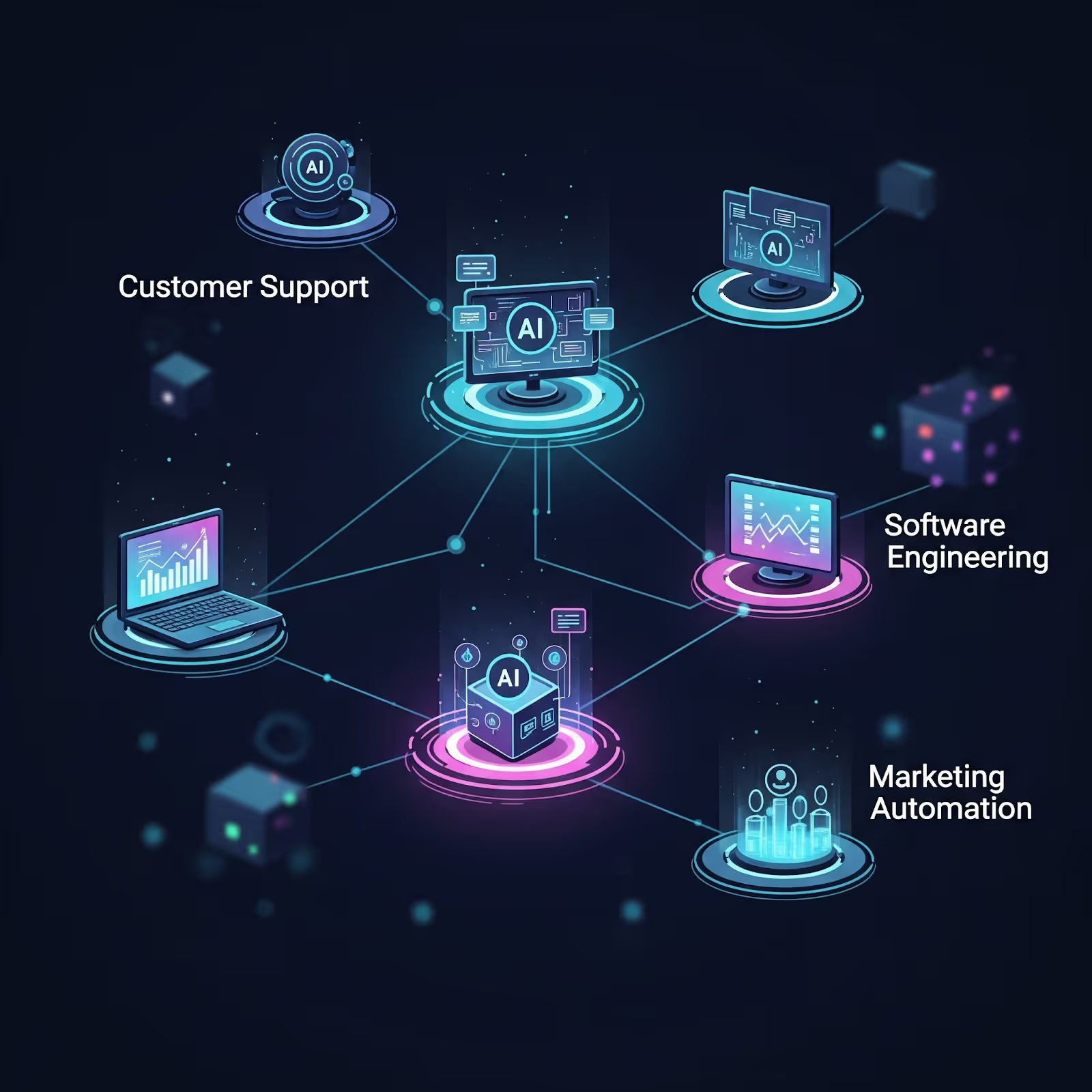
Although areas such as contact center workflows, AI-enhanced programming, and automated marketing have already highlighted its disruptive capabilities, Agentic AI is now surfacing as a pivotal framework to support these and other large-scale implementations.
Are Modern Data Observability Solutions Actually Equipped?
Modern IT systems, and cloud architectures rely heavily on observability, but what happens when that crucial support begins to buckle under growing complexity?

Few platforms are becoming proficient in monitoring data pipelines, spotting irregularities, and maintaining data quality. Yet, significant challenges persist. These tools frequently struggle to scale with vast and complex datasets, and real-time monitoring can be sluggish.
Despite notable progress, current observability solutions still fall short in managing today’s fast-changing and diverse data environments, signaling the need for continued innovation. Agentic AI is transforming data observability by taking a proactive, self-sufficient approach to modern data challenges.
Unlike conventional monitoring tools, it detects and addresses issues before they escalate, using advanced predictive techniques to foresee disruptions. Its continuously evolving algorithms allow it to scale effortlessly across vast, varied data environments, while its real-time capabilities reduce system lag. It also integrates smoothly with older systems, eliminating compatibility issues.
By automating root cause detection and delivering clear, actionable insights, it enables even non-expert users to manage complex data workflows. Additionally, it drives cost efficiency by optimizing resource utilization, making powerful observability more attainable.
Real-World Applications Of Agentic AI Across Key Sectors
Leading experts in the tech industry anticipate a sharp increase in the deployment of Agentic AI.
This growing trend is already making waves across various critical sectors.
Revolutionizing Customer Support:
Autonomous AI agents are now addressing standard queries independently. By incorporating real-time sentiment analysis, these systems boost user satisfaction and significantly cut down on response times.
Advancing Software Engineering:
Tools such as GitHub Copilot are showcasing agentic intelligence by continuously refining code, running tests, and correcting bugs, thereby accelerating and optimizing the development lifecycle.
Evolving Marketing Approaches:
AI-driven platforms are tailoring marketing efforts on the fly, adapting to user behavior across different channels. This level of real-time personalization is yielding substantial improvements in engagement and conversion outcomes.
The Emergence of Agentic AI in the Era of Data Observability
Legacy data observability solutions often depend on fixed rules and rigid dashboards, demanding frequent manual updates and supervision. Although initially heralded as a leap forward, their slow responsiveness and reliance on human input clashed with the principles of agile development.
Agentic AI offers a transformative alternative. These intelligent systems take initiative by spotting irregularities, pinpointing root causes, and autonomously suggesting or implementing fixes in real time. By continuously adapting through exposure to operational data and user interactions, they refine both precision and speed.
When embedded within data pipelines, monitoring layers, and metadata frameworks, agentic AI delivers seamless, full-spectrum insight across sprawling data infrastructures.
This evolution empowers organizations to minimize downtime, resolve incidents faster, and uphold data trust. As data landscapes become more intricate, agentic AI is emerging as a cornerstone for dependable data operations, freeing up teams to tackle strategic challenges instead of firefighting operational noise.
How Agentic AI Is Changing Roles in the Modern Data World
The shift to Agentic AI is more than just a technical upgrade, but rather a reshaping of how people across an organization work with data.
- Data Engineers are freed from constant troubleshooting. Instead, they can focus on higher-level strategy and innovation, while automated systems take care of routine maintenance, and L1-L2 issues.
- Data Managers no longer need to manually enforce policies. With AI at the helm, they can oversee smart governance tools that learn and adapt over time.
- Data Leaders gain more independence. With intuitive, self-service analytics tools, they can explore data frameworks and uncover insights without always needing to go through IT.
What’s next for AI-powered Data Management? The future of DataOps & FinOps with Revefi
While talking about AI agents on a broader aspect, the future of AI-powered Data Management lies in the ability to tailor these AI agents according to demand.
For instance, managing total spend across DataOps and data ecosystems has emerged as a throbbing problem for data teams all over the world.
AI-driven analytics shed light on data expenditures, shifting them from opaque, reactive expenses to strategically managed assets. By offering a consolidated perspective on costs, these tools empower finance and data teams to make smarter decisions regarding budgeting, financial oversight, forecasting, and resource allocation.

The result is improved accountability, enhanced financial control, and more effective long-term planning.
Revefi's newly launched AI Agent for DataOps, and FinOps offers a transformative solution for data teams.

With its zero-touch setup, organizations can swiftly gain insights, reduce data expenditures by up to 50%, and enhance operational efficiency tenfold. You can read the official full press release to know more.
Ready to revolutionize your data operations? Experience the benefits of Revefi's AI-powered platform firsthand.
Get started for free and unlock the full potential of your data infrastructure today.